UP TO THE MINUTE






OSHA’s Silica Standard
By Trent Cotney and Travis McConnell, Cotney Construction Law.
The key provision with the greatest impact on the roofing industry is the stricter permissible exposure limit (PEL) for respirable crystalline silica.
The Occupational Safety and Health Administration’s (OSHA) controversial rule regulating exposure to respirable crystalline silica (silica) took effect on June 23, 2016.
Enforcement of the new standard began on September 23, 2017 for those working in the construction industry, and on June 23, 2018 for the general industry.
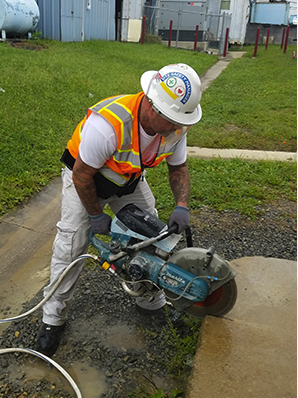
Silica is a common mineral found in concrete, brick, mortar, and other construction materials. Workers may be exposed to silica when performing tasks, such as: cutting masonry, operating jackhammers, drills, grinders, or using other heavy equipment. In the roofing industry, silica exposure commonly occurs as the result of cutting, crushing, drilling, or blasting cement roofing tiles. Yet, other common roofing activities may also lead to employee exposure.
OSHA’s new exposure limit reduces the allowable silica exposure from 250 to 50 micrograms per cubic meter of air averaged over a traditional eight-hour shift, a limitation that is five times lower than what was previously required for the construction industry. This degree of change in the regulatory standard is unprecedented for any industry. As a result, contractors will be required to comply with more burdensome rules mandating air monitoring procedures, use of respirators, medical examinations, testing, equipment maintenance, and will frequently be required to purchase new equipment which is compliant.
The rule requires employers to limit workers’ exposure to silica and provides two compliance options: follow Table 1 or implement alternative exposure control methods. Table 1 consists of 18 construction-related activities and details engineering controls, as well as the specific conditions which would require employees to wear respirators. For example, Table 1 requires that contractors use a saw equipped with an integrated water delivery system when using stationary masonry saws to cut material containing silica. When using a handheld drill to penetrate material containing silica, Table 1 requires contractors to use a drill with a dust collection system filter with 99% or greater efficiency and a filter-cleaning mechanism (along with other requirements).
Not a member yet? Learn more about becoming a member.
Photo: OSHA

UP TO THE MINUTE
Comments
Leave a Reply
Have an account? Login to leave a comment!
Sign In