

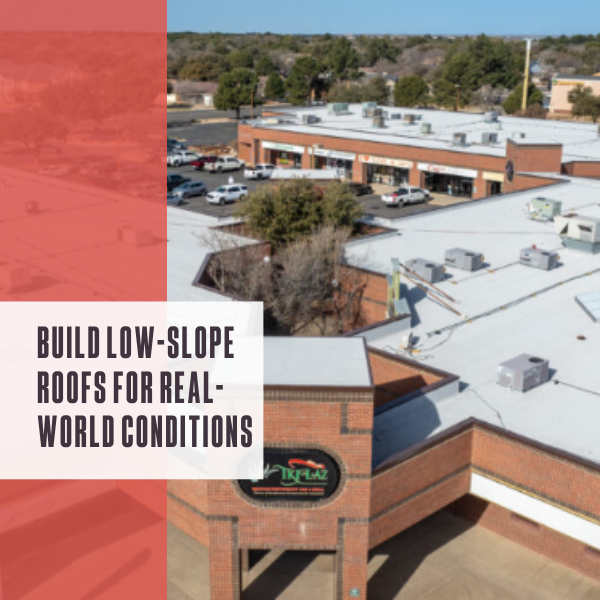
Build low-slope roofs for real-world conditions
By The Coffee Shops®.
Learn how drainage, climate, rooftop activity and installation constraints can guide material selection for long-term roof performance.
Low-slope roofing systems must withstand more than routine weather. Standing water, intense sunlight, temperature changes, foot traffic and complicated penetrations can expose weaknesses in both materials and installation. According to this article by, Polyglass U.S.A., Inc., selecting materials that take actual roof conditions into consideration is essential to improving long-term performance.
Drainage is one of the most important considerations. Low slopes and poorly positioned outlets can leave localized ponding after storms. When correcting these conditions is impractical, a waterproof system designed for constant moisture may be necessary. Polyglass identifies torch-applied, cold-adhered and self-adhered modified bitumen systems, along with liquid-applied waterproofing, as potential options. However, self-adhered systems should be limited to roofs with positive drainage.
Material selection should also account for ultraviolet exposure, temperature and rooftop activity. Styrene-butadiene-styrene (SBS) modified bitumen membranes maintain flexibility through temperature changes, while atactic polypropylene (APP) membranes offer resistance to ultraviolet exposure and high temperatures. Reinforced membranes, walkway systems and reflective coatings can provide additional protection in frequently traveled areas.
Details around curbs, drains, skylights, vents and pipe clusters require equal attention. Self-adhered membranes can support flame-free installation where torch use is restricted, while liquid-applied waterproofing systems can address tight corners and transitions. Coatings may also extend the service life of aged roofs, with silicone suited to ponding conditions and acrylic products intended for positive drainage.
A successful system brings each component together, including membranes, adhesives, insulation, surfacing and vapor control. By evaluating the roof’s drainage, climate, code requirements and jobsite conditions before selecting materials, contractors can create assemblies suited to the challenges they will face.
Learn more about Polyglass in their Coffee Shop Directory or visit www.polyglass.us.
Recommended For You

Designing the perfect roof with barrel tile metal panels
Read More ...
PVC systems built for demanding roofs
Read More ...
Meet the Roof Tile Cutter That is Eliminating Silica Dust Production
Read More ...
UP TO THE MINUTE




Comments
Leave a Reply
Have an account? Login to leave a comment!
Sign In