

Building safety that sticks
By Cotney Consulting Group.
Turning compliance into culture on roofing jobsites.
Safety isn’t just a program, a manual or a meeting. It’s what happens when leadership, training and accountability come together on a jobsite day after day, without exception. Yet, too often in roofing, safety culture gets reduced to slogans and paperwork. Crews sit through meetings, sign forms and nod in agreement, but the real question remains: Is safety part of how your people work or just something they’re told to care about?
The difference between compliance and culture can't be overstated in an industry where one mistake can have life-altering consequences. Compliance checks boxes. Culture changes behavior. And when it’s built the right way, it doesn’t fade when the safety director leaves the site; it sticks.
It starts at the top, but lives in the field
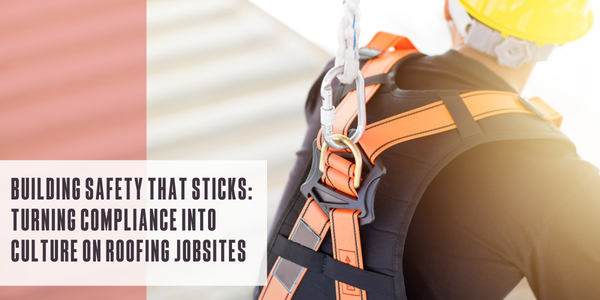
Safety culture always begins with leadership, but it can’t survive on directives alone. Crews will mirror what they see, not what they’re told. When management cuts corners, workers notice. When supervisors wear their harnesses correctly, insist on clear walk paths and follow lockout procedures, that behavior becomes contagious.
The best leaders don’t have to shout about safety — they show it. They stop unsafe work even when it slows production. They hold their supervisors accountable. They clarify that safety isn’t a line item — it’s a core value.
If safety feels like an “extra task,” leadership hasn’t made it part of the workflow. The companies that get it right build safety into planning, scheduling, budgeting and bonus structures, not as a side note, but as a measure of operational excellence.
Train for thinking, not just remembering
Many companies still treat safety training as a compliance exercise, one-size-fits-all PowerPoints and sign-in sheets. That’s not how adults learn, and it’s not how safety culture grows.
Real training teaches people how to think, not just what to memorize. It explains why procedures exist and how to make the right call when something goes wrong. It gives crews ownership.
Toolbox talks shouldn’t be monotone lectures; they should be discussions. Ask the crew where they see risks that morning. Let them identify hazards and solutions. If your people are engaged, you’ll learn more from a 10-minute conversation than from an hour-long presentation.
Measure what matters
You can’t improve what you don’t track, but too many companies measure safety by what doesn’t happen: “no incidents this quarter.” That’s not culture, that’s luck.
Instead, measure what drives results:
- Training completion rates
- Near-miss reporting
- Supervisor engagement in field audits
- Employee participation in safety planning
If you’re not tracking these leading indicators, you’re reacting instead of leading. Numbers matter, but the correct numbers tell a story about prevention, not just performance.
When workers see leadership tracking what they do right, not just punishing mistakes, the tone changes — accountability shifts from fear to ownership.
Turn conversations into action
Safety culture fails when communication dies. A company can have the best-written safety manual in the industry, but if nobody listens, it’s useless.
Great contractors close that gap. They use feedback loops from toolbox talks to post-job debriefs to turn small observations into meaningful change. When a crew reports an issue and sees it corrected, they learn that their voice matters. When they report it and nothing happens, they stop talking.
Every supervisor should ask a weekly question: “What’s making your job unsafe, and what can we fix?” Then follow through. That’s how you create a safety culture in real time.
Respect the realities of roofing work
Roofing isn’t an easy trade. Heat, heights, weather and constant movement create challenges that other industries don’t face. Workers deal with fatigue, changing crews and pressure to hit production targets. Pretending otherwise hurts credibility.
True safety leaders respect that reality. They don’t push for “perfect compliance”; they build realistic systems that make safety practical. That might mean designing more efficient material layouts to reduce trips, rotating crews during heat waves or ensuring breaks are enforced even when schedules are tight.
Culture isn’t created by preaching perfection; it’s built by removing excuses.
Recognize and reinforce
Culture thrives on reinforcement. Positive recognition works far better than punishment regarding long-term behavioral change. Recognize crews that identify hazards early, maintain clean worksites or report near-misses. Make it public and genuine.
Incentive programs should reward the right things, such as proactive safety behavior, not just “no injury” streaks. Rewarding luck breeds silence, while rewarding participation builds engagement.
Accountability is the glue
No safety system survives without accountability. That doesn’t mean discipline for its own sake; it means clear expectations and consistent follow-through.
It can't be brushed off when a worker ignores PPE rules or skips a pre-lift check. Respectful corrective action reinforces standards. As importantly, management must hold itself accountable when a deadline pushes unsafe behavior; leadership owns that, too.
Safety culture doesn’t crumble from one mistake. It erodes from inconsistency. Every time a rule is enforced one day and ignored the next, your credibility weakens.
A strong safety culture doesn’t happen by hiring the right person or posting the right sign. It occurs when every level of your company, from ownership to apprentice, understands its role and takes pride in doing the job right.
Compliance is the floor, culture is the ceiling and the difference between the two is leadership that practices what it preaches.
In roofing, you can’t build trust or longevity without safety that sticks. When safety becomes second nature, planned, practiced and led by example, you’re not just running safer crews. You’re running a better business.
Learn more about Cotney Consulting Group in their Coffee Shop Directory or visit www.cotneyconsulting.com.
Recommended For You

Four Entry Points for Hazardous Chemicals
Read More ...
Roof smart: Why common sense is your first line of safety
Read More ...
Job Site Safety: Fatal Falls At Their Highest Level in 26 Years
Read More ...
UP TO THE MINUTE





Comments
Leave a Reply
Have an account? Login to leave a comment!
Sign In