UP TO THE MINUTE





Cognitive Bias in Construction: High-Levels of Safety Gear Doesn’t Guarantee Safety.
By Cass Jacoby, RCS Reporter.
Study finds more safety equipment can lead to a false sense of security and riskier behaviors.
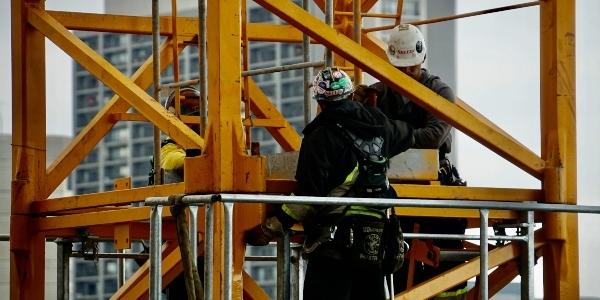
New research has found that roofing workers with more safety gear take more risks. According to Popular Mechanics, workers are less safe overall when they place their trust fully in safety gear to protect them. For example, say a roofing contractor becomes too comfortable with perimeter barriers, they might take a step closer to the roof’s edge than they typically would because they believe the safety intervention will fully protect them.
Civil engineering researchers at Virginia Tech and Clemson University theorize in their work in the Journal of Construction Engineering and Management that roofing workers are experiencing a false sense of security from their safety gear called risk compensation.
Risk compensation is a cognitive bias, or a systematic error in thinking, that everyone falls into. Driving, for example, is an area in a lot of our lives where we tend to over trust safety technology. Drivers with blind spot detectors built into their mirrors might be less prone to check their blind spots or it has been found that seat-belt wearers tend to drive on the faster side.
Researchers at Virginia Tech and Clemson University conducted a roofing experiment to better observe cognitive bias within construction. Their experiment utilized groundbreaking virtual reality headsets to simulate roof work, sampling a group of students with some construction work experience to act as unskilled roofers. Students were categorized into three randomly ordered levels of safety equipment: Personal Protective Equipment (PPE) only (hard hat, gloves and knee pads); PPE and a fall-arrest system; and PPE, a fall-arrest system and a perimeter guardrail.
The study found that higher levels of safety created a sense of invincibility among participants. The more safety interventions in place, the more risk-taking behavior the students would take. The National Roofing Contractors Association (NRCA) quotes the study’s claim that, “This false sense of security ultimately increased their risk-taking behavior by up to 55 percent: participants stepped closer to the roof edge, leaned over the edge and spent more time exposing themselves to fall risk.”
With their findings, researchers recommend new kinds of training or monitoring systems to ensure that workers don’t jeopardize their safety while relying on risk compensation. Overall, we can take away from this research that safety gear and a safety mindset are two equally important halves of risk management, and no amount of safety technology can substitute for good old-fashioned caution and discernment.
Stay up to date with the latest roofing industry news when you sign up for the RCS Week in Roofing e-news.
Recommended For You

Lo más destacado de agosto en RoofersCoffeeShop En Español
Read More ...
Protecting Workers and Employers Amidst the Coronavirus
Read More ...
RoofersCoffeeShop® Welcomes NRCA ProCertification®
Read More ...
UP TO THE MINUTE
Comments
Leave a Reply
Have an account? Login to leave a comment!
Sign In