

Proactive weather strategies reduce facility risk
By Jesse Sanchez.
Learn how proactive maintenance, planning and financial strategy can help facilities withstand increasingly severe weather.
As storm activity intensifies, the cost of delayed action continues to rise. Benchmark notes that in response, organizations are moving away from reactive repair cycles and toward proactive asset management strategies that prioritize continuity, safety and long-term performance.
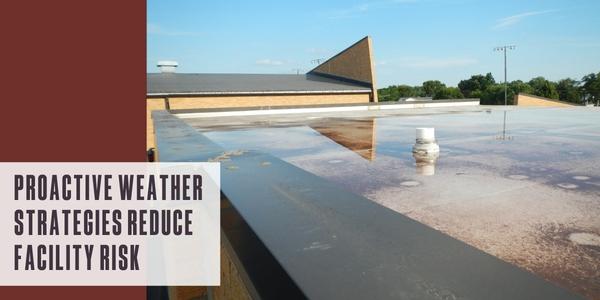
That shift becomes most visible at the building’s exterior, where risk often begins. Roof systems and surrounding pavement serve as the first line of defense, yet they frequently go unnoticed until failure occurs. When drainage systems become obstructed or surfaces begin to deteriorate, the impact can escalate quickly, from localized ponding to interior water intrusion, structural strain and operational disruption.
Preventing those outcomes requires routine maintenance, including clearing debris from drainage systems, identifying minor roof vulnerabilities and tracking post-storm repairs, which helps stabilize performance before issues compound. In more advanced stages of deterioration, full roof replacement may be the most practical solution. At the same time, pavement conditions demand equal scrutiny. Cracking, erosion and pothole formation not only disrupt drainage but also introduce safety concerns for vehicles and pedestrians, increasing exposure to liability.
To address these risks more effectively, facility managers are adopting structured, forward-looking approaches. Regular inspections, timely interventions and the use of higher-quality materials strengthen resilience under stress. Maintaining clear and functional drainage pathways remains central to this effort, as even minor blockages can trigger widespread water accumulation and downstream damage.
Operational readiness, however, extends beyond physical systems. Staff training, emergency response planning and financial preparedness all contribute to a facility’s ability to respond and recover. Allocating resources for both immediate repairs and long-term mitigation, while maintaining a clear understanding of insurance coverage, supports faster, more controlled recovery. Integrating sustainability strategies further reinforces resilience by aligning infrastructure decisions with evolving environmental demands.
With consistent weather volatility, proactive planning is no longer optional. Organizations that anticipate risk, rather than react to it, are better positioned to reduce downtime, manage costs and maintain confidence in their operations despite increasingly unpredictable conditions.
Learn more about Benchmark in their Coffee Shop Directory or visit www.benchmark-inc.com.
About the author

Jesse is a writer for The Coffee Shops. When he is not writing and learning about the roofing industry, he can be found powerlifting, playing saxophone or reading a good book.
Recommended For You
Why roofing contractors must understand lightning protection
Read More ...
Some Striking Facts About Lightning
Read More ...
Roofing Contractors Responding After the Storm
Read More ...
UP TO THE MINUTE





Comments
Leave a Reply
Have an account? Login to leave a comment!
Sign In