

Put an end to ponding water problems
By Emma Peterson.
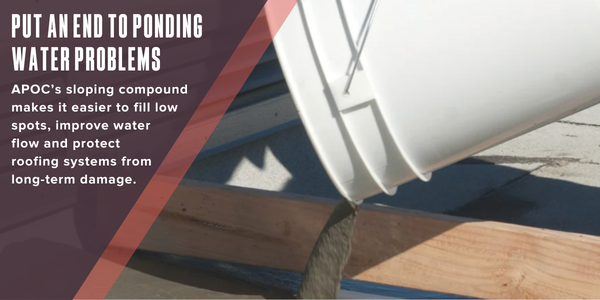
APOC’s sloping compound makes it easier to fill low spots, improve water flow and protect roofing systems from long-term damage.
Ponding water is standing water on flat or low-lying parts of a roof and, as every commercial contractor knows all too well, can cause a series of issues including but not limited to moisture intrusion, roof system deterioration and mold growth. Ponding water can also be a frustrating problem to solve, as fixing it often entails changing the slope of the entire roof.
To help make this problem easier to solve, the team at APOC developed a cost-effective, acrylic-modified, cementitious sloping compound specifically engineered to address ponding water issues. This product, RoofSlope®, provides “a way to fill in low spots on flat roofs and achieve positive slope to aid in proper drainage.” RoofSlope is perfect for both new construction and retrofit work as the patented technology behind the product allows it to create a durable finish that attaches to a wide variety of substrates and matches existing roof compositions.
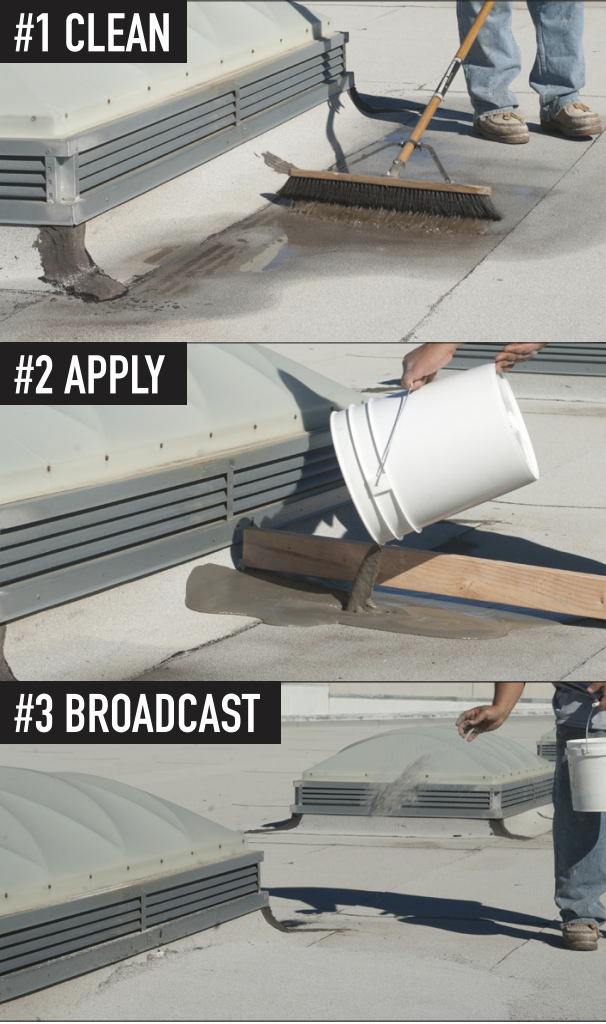 The best part? Application in the field is as simple as five steps that can be completed in one trip to the job site:
- Clean and prepare: As with any low-slope roofing application, the first step is to clean your roof and ensure that the membrane you’re installing on top of is sound.
- Mix, mix, mix: RoofSlope is designed to be mixed with water for application. APOC guidelines dictate that one pail of RoofSlope needs to be thoroughly mixed with 1 ¼ gallons of water.
- Application: Once the roof is prepared and the mixture of RoofSlope and water is smooth, contractors should apply it to the roof using a screed board and a trowel. A wet paintbrush is also recommended in order to slope the product flush to the membrane without any lips or raised edges.
- Broadcast: This product is fast drying, so you want to immediately broadcast roof granules or sand of similar size (16 grit) onto the product after application while it is still wet.
- Clean up: Warm soapy water should be used to clean both tools and hands, with a thorough rinse to ensure product has been removed.
And with just those five steps, contractors can achieve positive slope on roofs, achieve proper drainage and resolve any ponding issues before they lead to roof system failures.
Learn more about APOC in their Coffee Shop Directory or visit www.apoc.com.
About the author

Emma is the senior content developer at The Coffee Shops and AskARoofer™. When she's not working or overthinking everything a little bit, she enjoys watching movies with friends, attending concerts and trying to cook new recipes.
Recommended For You
Why metal siding outshines wood and vinyl
Read More ...
The Cascade shingle is taking roofing to new heights
Read More ...
Streamline roof repairs with this free roof patch!
Read More ...
UP TO THE MINUTE






Comments
Leave a Reply
Have an account? Login to leave a comment!
Sign In