

Six Important Tips for Maintaining Ladder Safety While Roofing
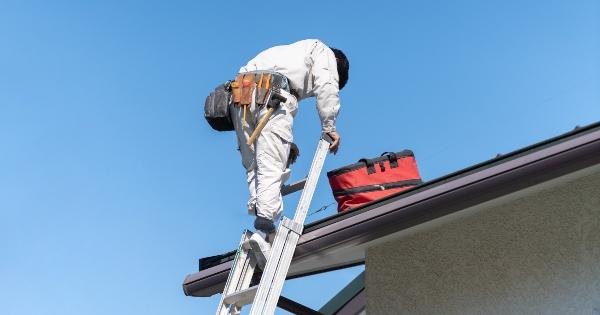
Ladders are present on virtually every jobsite and provide employees with convenient options to access upper levels.
Unfortunately, the hazard of falling can pose significant risks to employees using ladders. Additionally, because non-compliant ladder use is highly visible, it is one of OSHA’s most frequent reasons for issuing citations.
To protect employees, keep the following tips in mind:
-
Inspections. Ensure that ladders are inspected by a competent person for visible defects on a periodic basis and after any occurrence that could affect their safe use. Immediately remove ladders from use which are defective and no longer safe.
-
Training. Train all workers on how to recognize hazards related to ladders and in the procedures to be followed to minimize those hazards. Ensure workers understand they must always maintain three points of contact when ascending or descending a ladder. Additionally, train workers not to carry anything that could cause them to lose their balance and fall. (Workers can put tools in a bucket and use a rope to pull them up to the working level.)
-
Ladder Location. Use ladders only on stable and level surfaces unless they are secured to prevent accidental displacement. It may be necessary to take steps to create a secure footing that will support the ladder without the ladder sinking, shifting, or sliding. Keep the areas at the top and bottom of the ladder clear and do not place ladders in areas of traffic unless they are secured to prevent accidental displacement or protected from traffic via a barricade.
-
1:4 Angle. Non-self-supporting ladders must be set at an angle so the horizontal distance between the top support and the foot of the ladder is approximately one-quarter the working length of the ladder (a 1:4 ratio).
-
Ladder Elevation. The side rails of the ladder generally must extend at least 3 feet above the upper landing surface. When such an extension is not possible because of the ladder’s length, the ladder must be secured at its top to a rigid support that will not deflect and a grasping device, such as a grabrail, must be provided to assist workers in mounting and dismounting the ladder.
-
Use of Stepladders. Use stepladders only in the fully open position. Workers must not use the top or the top step of a stepladder as a step because doing so could lead to serious injury.
Authors Note: The information contained in this article is for general educational information only. This information does not constitute legal advice, nor should it be relied upon as legal advice for your specific factual pattern or situation.
About Travis S. McConnell
Travis is a Jacksonville, FL construction law attorney with Cotney Construction Law, LLP. McConnell’s practice focuses on all aspects of construction law. He works extensively on matters relating to OSHA defense, which includes the management and development of safety and health strategies for construction contractors across the United States. McConnell’s OSHA practice concentrates on litigation and the appeals of citations involving catastrophic construction-related accidents. For more information, contact: Travis McConnell, tmcconnell@CotneyCL.com.
Recommended For You

When every second counts: Emergency planning for roofing crews
Read More ...
World Class in Safety – Part One
Read More ...
Three Key Questions About OSHA Inspections
Read More ...
UP TO THE MINUTE






Comments
Leave a Reply
Have an account? Login to leave a comment!
Sign In