UP TO THE MINUTE






Solar powered attic fans: What roofing contractors should know
By Attic Breeze.
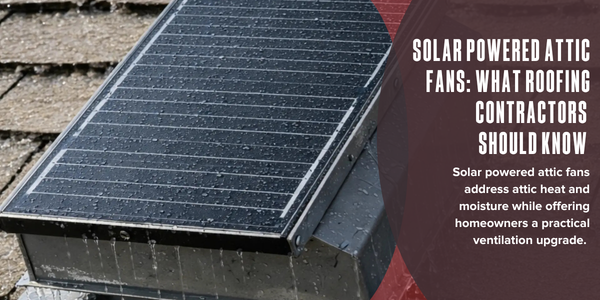
Solar powered attic fans address attic heat and moisture while offering homeowners a practical ventilation upgrade.
A quality roofing system does more than keep water out. It also helps manage heat and moisture throughout the attic. When ventilation is inadequate, the symptoms may include excessive attic temperatures, moisture accumulation, condensation and additional strain on the home’s cooling system.
For roofing contractors, that makes attic ventilation an important part of a complete roof system and a potential opportunity to provide more value to homeowners.
Why attic ventilation deserves a closer look
During a roof inspection, contractors often focus on shingles, flashing, decking, penetrations and drainage. The attic can reveal just as much about the performance of the roof system.
Common warning signs include:
- Excessive heat inside the attic
- Rusted fasteners or roofing nails
- Damp or compressed insulation
- Mold or mildew-like staining
- Condensation on the underside of the roof deck
- Blocked or insufficient intake vents
- Uneven airflow across the attic
These conditions do not automatically mean a powered attic fan is the answer. Air leakage from the conditioned space, poor insulation, bathroom exhaust terminating in the attic or insufficient soffit ventilation may also contribute to the problem.
The goal is to evaluate the attic as a system before recommending a product.
Where active ventilation fits
An Attic Breeze solar powered attic fan uses energy from a solar panel to exhaust air from the attic. Because the system is 100% solar powered, it can operate without a conventional electrical connection under normal solar operation.
This can make the product attractive to homeowners who want:
- An attic-ventilation upgrade without adding normal operating electricity costs
- A solution for complex roof designs with limited passive exhaust options
- Additional ventilation during sunny, high-heat conditions
- A professionally installed accessory integrated into a roofing project
Attic Breeze currently offers multiple installation configurations, including self-flashing fans for low profile roofing including asphalt shingles and curb-mounted models for metal, tile or other high profile roofing materials, all with Miami-Dade NOA certification. This allows contractors to select a configuration suited to the roof design instead of forcing one mounting style onto every project.
Intake ventilation comes first
A powered exhaust fan cannot perform properly unless enough replacement air can enter the attic.
Before installing a solar powered attic fan like Attic Breeze, inspect the soffit and other intake vents. Look for insulation, paint, debris or framing conditions that may restrict airflow. Calculate the available net free ventilating area and compare it with the requirements for the selected fan, the roof design and applicable building codes.
Insufficient intake can reduce fan performance. It may also cause the fan to pull air through unintended openings, including gaps between the attic and conditioned living space.
For that reason, a complete proposal may need to include:
- Clearing or adding intake vents
- Installing ventilation baffles
- Air-sealing attic bypasses
- Correcting improperly terminated exhaust ducts
- Improving insulation where necessary
Installation details matter
Roofers already understand that a rooftop accessory is only as reliable as its flashing and placement. Always follow the current instructions for the specific model, roof covering and mounting configuration.
The manufacturer’s guidance for installation emphasizes choosing a location that supports balanced airflow and receives adequate sunlight. It also warns installers to maintain appropriate separation from other exhaust openings and passive vents.
A professional installation should include:
- Confirming the fan is correctly sized for the attic.
- Verifying adequate intake ventilation.
- Checking the proposed location from both the roof and attic.
- Identifying rafters, wiring, plumbing and other obstructions before cutting.
- Integrating the flashing correctly with the roof covering.
- Keeping the solar panel covered and/ or thermal switch unplugged until it is safe to let the fan operate.
- Testing the fan on the ground prior to cutting any roof penetrations, then a final test of the complete system after installation.
- Photographing the completed work for the customer and project file.
- Registering the installed fan in accordance with the Lifetime Limited Parts Warranty.
Attic Breeze provides excellent contractor support with its dedicated technical services team as well as Certified Installer training to ensure contractors are confident in installing upgraded ventilation with their roofing system.
A useful upgrade during roof replacement
The most convenient time to discuss attic ventilation is often during roof replacement. The contractor already has access to the roof and can evaluate the deck, intake openings, existing exhaust vents, insulation and attic conditions as part of one project.
A focus on solar powered fans can also create a natural conversation about overall roof performance. Instead of presenting it as a stand-alone gadget, explain how it fits into a broader ventilation strategy.
A straightforward homeowner explanation might be:
“Active ventilation like solar powered fans exhaust hot or moisture-laden attic air providing many more air cycles or turns per hour than traditional passive vents. Before recommending it, we verify that the attic has enough intake ventilation and that there are no major air leaks or moisture sources that need to be corrected first.”
That approach sets realistic expectations and demonstrates professional judgment.
The bottom line for roofers
Attic Breeze gives roofing contractors another option for addressing attic heat and moisture concerns, particularly when homeowners are interested in solar-powered ventilation.
The best results begin with a proper attic assessment. Confirm the moisture source, inspect insulation and air sealing, calculate intake requirements, choose the appropriate fan configuration and follow the current installation instructions.
That system-first approach protects the roof, supports fan performance and gives homeowners a solution based on the actual needs of their property.
Ready to add solar-powered attic ventilation to your roofing services? Speak with a ventilation specialist today to learn about first-time user incentives and Certified Installer training available in your area. Contractor Programs: Rebates & Rewards | Attic Breeze
Manufactured in the USA using only the highest quality domestic and foreign parts.
Learn more about Attic Breeze in their Coffee Shop Directory or visit atticbreeze.com.
Recommended For You

S-5! debuts SnoGard EF™ & presents accredited education at METALCON
Read More ...
The Key to Combatting the Labor Shortage
Read More ...
Why Roofers Everywhere Should Attend Roofing Day in D.C.
Read More ...
UP TO THE MINUTE
Comments
Leave a Reply
Have an account? Login to leave a comment!
Sign In