
Steel city or city of bridges
By METALCON.
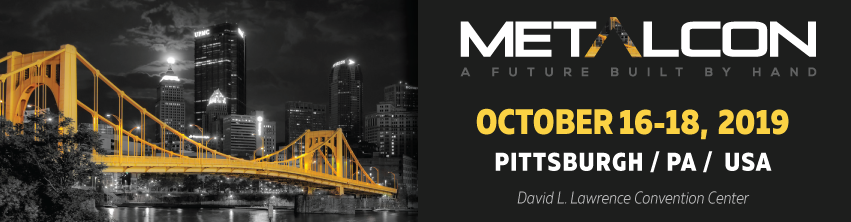
Pittsburgh’s hundreds of bridges and history of steel production perfect site for METALCON 2019.
Both! Pittsburgh, Pennsylvania, has long been known as the “Steel City” for its more than 300 steel-related businesses, but with its 446 bridges connecting the city together, it’s also known as the “City of Bridges.”
METALCON 2019 is proud to announce that it will be heading to Pittsburgh next October 16-18, 2019! A show all about metal meeting in a city known for its steel history and its metal bridges? Seems all together fitting!
Pittsburgh is located at the confluence of three major rivers and developed as a vital link between the Atlantic coast and Midwest. The city of Pittsburgh and Allegheny County are the largest owners of great bridges in the country, in proper proportion to their size, with the possible exception of the City of New York, which is built on an island and surrounded by large bodies of water. The bridges play an important role in the city’s transportation system. Without bridges, the Pittsburgh region would be a series of fragmented valleys, hillsides, river plains, and isolated communities.
Historically, the city has served as an industrial hub for coal mining and steel production, dating back to when the Civil War boosted the city’s economy with increased iron and armament demand. With his introduction of the Bessemer steel making process, Scottish immigrant Andrew Carnegie began steel production in 1875. Henry Clay Frick, grandson of western Pennsylvania whiskey distillers, made his fortune building and operating beehive coking ovens where coal was turned into coke, a necessary raw material in steel making. The two men came together to form the Carnegie Steel Co. and in 1901, Carnegie and Frick merged several companies to form the United States Steel Corp.
While the riverfront steel mills of the Mon Valley are mostly gone now, the generosity of industrial giants like Carnegie and Frick, food manufacturer H.J. Heinz, and banker/financier Andrew Mellon lives on in a legacy of art, culture and education in Pittsburgh. Andrew Carnegie’s generous public donations have included The Carnegie Library, Carnegie Museums of Pittsburgh, and Carnegie Institute of Technology (known today as Carnegie Mellon University).
Up through the mid-1950s, Pittsburgh was the nation’s eighth-largest city, accounting for nearly half of national steel output. The city’s population swelled to over a half million with European immigration via Ellis Island. Pittsburgh’s patchwork of neighborhoods still retains an ethnic character reflecting the city’s immigrant history.
Even though Pittsburgh faced rough times in the 1970s and 80s when steel production all but disappeared from its landscape, it has since re-invented itself as a hub for education, medicine, small manufacturing and research.
We look forward to highlighting this city steeped in history through the course of the year. Visit Pittsburgh for more interesting facts on the home of METALCON 2019!
Learn more about METALCON.
Source: METALCON.
Recommended For You

Job board connects talent with metal building careers
Read More ...
NFBA 2020 Frame Building Expo: Who To See, What To Do
Read More ...
Registration is Now Open! Here are the Top 3 Reasons to Attend the IRE
Read More ...
UP TO THE MINUTE



Comments
Leave a Reply
Have an account? Login to leave a comment!
Sign In