
Study Shows This Stone-wool Insulation Has a Stable R-value
By ROCKWOOL.
Research on a building that’s insulated with ROCKWOOL’s stone wool insulation finds its R-value is stable in cold and hot temperatures.
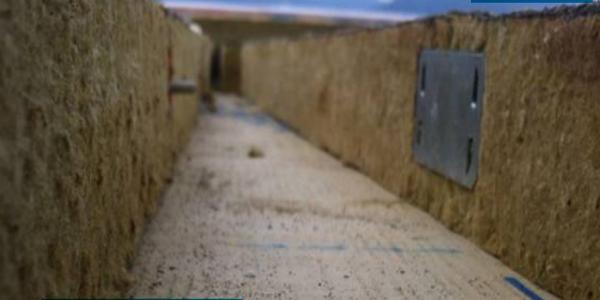
Researchers performed a recent case study on the performance of ROCKWOOL’s stone wool insulation in the Chilliwack Building in British Columbia. The team from RDH Building Engineering Ltd. was studying this building as a part of a larger study on roof performance. Specifically, they were measuring the R-value, a measure of how well insulation reacts to heat, of the building’s insulation.
A large-scale field monitoring study was implemented in the Lower Mainland of British Columbia with the intent of measuring the impacts and benefits of roof membrane color and insulation strategy on the long-term thermal and hydrothermal behavior and performance of conventional roofing assemblies. Three different two-ply SBS roof membrane cap sheet colors were installed over three different insulation arrangements for a total of nine unique test roof assemblies which were installed on an industrial building located in Chilliwack within the Lower Mainland of British Columbia, Canada.
Chilliwack is located in ASHRAE Climate Zone 5 and has a climate similar to the larger nearby metropolis of Vancouver, though as it is farther inland, it typically gets hotter in the summer and colder in the winter. The average annual temperature at the Chilliwack airport, located approximately 1 km (0.6 miles) from the site is 10.5°C (50.9°F), and the average July and January temperatures are 18.5°C (65.3°F) and 2.2°C (36.0°F) respectively (Environment Canada 2013).
Sensors were installed within each of the roof assemblies to measure material and surface temperatures, relative humidity, moisture content, heat flux and dimensional stability of the insulation.
Insulation arrangement apparent R-values
Laboratory measurements were made of the apparent R-value/inch for each insulation product and then the results were used to determine the apparent R-values of the three insulation arrangements for this study, which are shown below.
By measuring both new and aged samples of polyisocyanurate (polyiso) insulation, the long-term aging impacts on the thermal performance of the polyiso were also predicted.
While the roof assembly constructed with polyiso has a rated R-value of R-21.3, when exposed to cold (-10°C (14°F)) the performance of this roof assembly reduces to R-20 or potentially as low as R-16.5 depending on aging effects. When exposed to hot temperatures (60°C (140°F)) the apparent R-value is reduced to R-16.5 or potentially as low as R-14.0 depending aging effects. In the hybrid assembly, the use of a layer of stone wool insulation (in this case, equivalent to approximately 45% of the assembly R-value) over top of the polyiso significantly improves the effective R-value of the polyiso as it keeps it near optimum temperatures (which are similar to typical interior temperatures), and therefore results in a better assembly R-value in cold and hot conditions. The roof assembly insulated with entirely stone wool insulation has a more stable R-value (increasing at colder temperatures, but decreasing at hot temperatures from rated R-value), and is not susceptible to a loss of R-value with age.
Field monitoring results
Significant differences in the heat flux, interior and exterior surface temperatures were also found with respect to insulation strategy. An apparent thermal lag is observed within the stone wool insulation and hybrid insulation assemblies compared to the polyiso insulation. This finding presents dampened heat flux measurements, reduced cap sheet surface temperatures and lower interior surface temperatures, primarily when the roof is heated by the sun. This lag in temperatures can be beneficial from a thermal comfort, energy efficiency and membrane durability standpoint because it moderates peak temperatures and thereby reduces energy losses and gains and likely also reduces the rate of deterioration of the membrane by reducing chemical degradation and thermal movement. The assemblies with a white cap sheet also typically had less inward heat flux than the black and grey roofs.
Overall, this study provides insight into the behavior of polyiso and stone wool insulated conventional roof 6 Burlington, VT 7 Duluth 8 Fairbanks Average assemblies with light to dark roofing membranes. In selecting the materials for a conventional roofing system, it is important to consider the effects of these different options on aspects of building and roof performance including apparent R-value at in-service conditions, building energy consumption and membrane durability.
Learn more about ROCKWOOL in their RoofersCoffeeShop® Directory or visit rockwool.com.
Original article source: ROCKWOOL
Recommended For You

Metal buildings keep vehicle businesses moving
Read More ...
Xipre is Making a More Sustainable Future for Argentina and Latin America
Read More ...
Cornerstone Bible Church Renews Roof With Metal Shingles
Read More ...
UP TO THE MINUTE






Comments
Leave a Reply
Have an account? Login to leave a comment!
Sign In