UP TO THE MINUTE




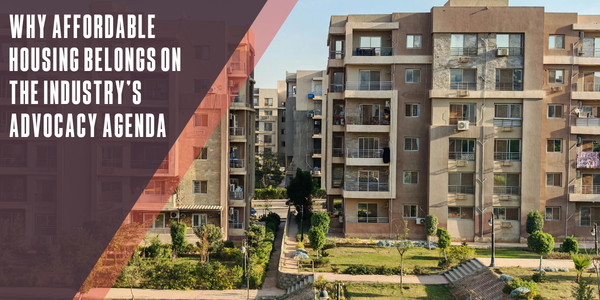
Why affordable housing belongs on the industry’s advocacy agenda
By Dani Sheehan.
Roofing Day in D.C. offers an opportunity to advocate in support of policies that strengthen communities and expand access to safe, reliable housing.
The U.S. is currently facing a shortage of roughly 1.5 million housing units each year. Not only does this gap create challenges for homebuyers and renters, but it also puts pressure on entire communities, from workforce stability to economic growth. The roofing community has a unique and important voice in this conversation, which is why affordable housing is a key focus at this year’s Roofing Day in D.C. on April 14-15, 2026.
For the National Roofing Contractors Association (NRCA) and Roofing Day in D.C. partner organizations, the conversation isn’t just about acknowledging the housing crisis; it’s about advancing specific, bipartisan solutions that can help address it. The roofing industry is advocating for legislation designed to increase housing supply in realistic, scalable ways, through new construction, redevelopment or rehabilitation.
Reimagining existing spaces
The Revitalizing Downtowns and Main Streets Act (H.R. 2410) focuses on converting vacant or outdated commercial properties into residential housing. Instead of leaving office buildings and storefronts empty, this legislation creates a pathway to bring them back into use.
By offering a federal tax credit for conversion costs, the bill helps make these often complex projects financially feasible. It also includes provisions to ensure a portion of the resulting housing remains affordable for local communities over the long term.
Closing the gap in underserved communities
In many parts of the country, especially in both rural areas and underserved urban neighborhoods, the economics of building or renovating homes simply don’t add up. The cost to construct or rehabilitate a home can exceed what buyers in the area can afford to pay. Because of this, many projects never happen, and communities continue to struggle with limited housing options.
The Neighborhood Homes Investment Act (H.R. 2854/S. 1686) addresses that gap directly by providing tax credits to offset the difference between development costs and market value. It’s a targeted approach that encourages investment where it’s needed most, while also ensuring homes remain attainable for local residents.
Why you should be part of this conversation
Housing availability affects where people live, how communities grow and whether local economies can support the businesses that rely on them. It influences workforce stability, community resilience and long-term development patterns.
You see these impacts firsthand. You work in the neighborhoods being discussed. You see which projects move forward and which don’t. You understand the real-world challenges behind the numbers. Lawmakers need this perspective to help ensure meaningful change.
As the largest roofing industry advocacy event, Roofing Day in D.C. creates a space where you can directly inform policy conversations. When you meet with members of Congress, you are representing the industry as a whole and helping to bridge the gap between legislation and implementation.
Advocating for affordable housing is about recognizing the role the roofing industry plays in the larger built environment. Every project, whether it’s new construction, a retrofit or a repair, contributes to the safety, accessibility and longevity of housing in this country.
Learn more about National Roofing Contractors Association (NRCA) in their Coffee Shop Directory or visit www.nrca.net.
About the author

Dani is a writer for The Coffee Shops. When she's not writing or researching, she's exploring new hiking trails or teaching yoga classes.
Recommended For You

Check out what’s new with TPO!
Read More ...
Introducing the 2023 ORCA Board Members
Read More ...
NRCA encourages roofing professionals to complete latest Quarterly Market Index Survey for Reroofing 2026
Read More ...
UP TO THE MINUTE
Comments
Leave a Reply
Have an account? Login to leave a comment!
Sign In