
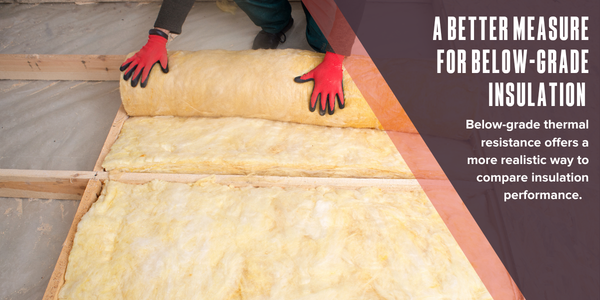
A better measure for below-grade insulation
By The Coffee Shops™.
Below-grade thermal resistance offers a more realistic way to compare insulation performance.
Selecting insulation for below-grade applications requires an understanding of how materials perform when moisture exposure is prolonged and drying potential is limited. An article for the Polyisocyanurate Insulation Manufacturers Association (PIMA) explains why traditional R-value testing may not accurately represent these demanding conditions.
Historical testing typically measured thermal performance after moisture exposures lasting two to 96 hours, followed by a drying period. According to the article, this approach does not reflect soil moisture cycles, hydrostatic pressure or freeze-thaw events that can affect below-grade installations over longer periods. Dry-out testing can also favor open-cell products that release absorbed moisture when allowed to drain or dry under laboratory conditions.
Below-grade thermal resistance (RBG) presents a different approach. It measures an insulation product’s R-value after a 28-day simulated moisture exposure, providing a comparison based on extended conditioning without a drying period.
PIMA worked with a third-party laboratory to evaluate polyisocyanurate continuous insulation (polyiso CI), expanded polystyrene (EPS) and extruded polystyrene (XPS). The research combined a modified ASTM D2842 water absorption test, extending submersion to 28 days, with a modified ASTM C518 thermal resistance test conducted while the materials remained wet.
Following submersion, polyiso CI retained 95% of its labeled R-value. Under the same laboratory conditions, it performed significantly better than EPS and produced RBG values comparable to XPS.
The findings also highlight a limitation in current standards. Common thermal test methods do not quantify the effect of moisture exposure on R-value, while ASCE 32 relies on assumed values for polystyrene products derived from historical testing.
By evaluating insulation after prolonged exposure and without dry-out time, RBG offers design professionals a more transparent comparison for moisture-exposed applications.
Learn more about below-grade thermal resistance by reading the full article.
Learn more about Polyisocyanurate Insulation Manufacturers Association (PIMA) in their Coffee Shop Directory or visit www.polyiso.org.
Recommended For You

Is There Really a Labor Shortage in Roofing?
Read More ...
Catching Up at IRE After 20 Years
Read More ...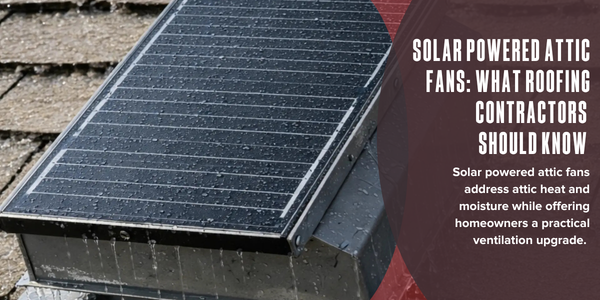
Solar powered attic fans: What roofing contractors should know
Read More ...
UP TO THE MINUTE






Comments
Leave a Reply
Have an account? Login to leave a comment!
Sign In