

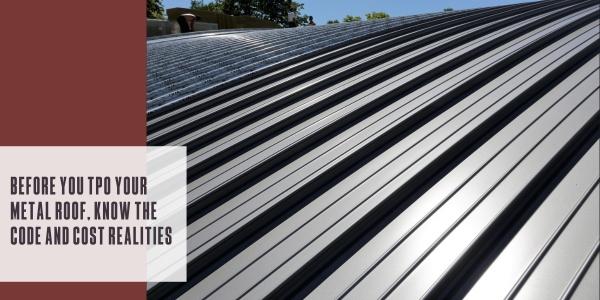
Before you TPO your metal roof, know the code and cost realities
By Jesse Sanchez.
A TPO retrofit might look simple on paper, but contractors warn that code, load and long-term performance details can shift the real value of the project.
Before building owners commit to a TPO installation over an existing metal roof, Roof Hugger says the first step is confirming whether the proposed assembly meets current building and safety codes. According to the company, wind loads, dead loads, snow loads and fire ratings all factor into compliance before pricing even enters the discussion.
Contractors evaluating wind performance are urged to verify the fastening strategy and confirm that attachments align to purlins instead of old roof panels. With some purlins spaced 5 feet on center, the company notes that TPO must be attached 5 feet on center or less to meet requirements. Only a small number of assemblies offered on the market are approved for existing metal buildings, so the review becomes more critical on older structures.
Dead load limits create another checkpoint. The International Existing Building Code caps added weight at 3 pounds per square foot. Systems that introduce a recover board can exceed that limit, while metal systems typically add less than 2 pounds per square foot. Roof Hugger says its systems may also increase purlin capacity, giving metal retrofits an engineering advantage.
Snow load compliance can be even harder to achieve. The company points to updated ground snow loads and drift calculations that many older roofs fail to meet. Because TPO systems rely on a membrane and foam insulation, both nonstructural components, adding weight without reinforcing the existing structure, will not solve an underlying deficiency.
Roof geometry issues such as valley gutters or parapets can complicate performance as well. Some TPO proposals call for filling gutters and adding scuppers; a move the company warns can trap water and put metal buildings at risk.
Pricing comparisons often draw attention because TPO can be 20 to 25 percent less expensive than metal. But the company says ownership cost tells a different story. Predicted service life ranges from 18 to 24 years for TPO, compared to 40 years for 24 gauge painted metal panels and 60 years for zinc aluminum coated metal. Metal’s longevity nearly triples TPO’s life for a relatively small price difference.
Additional considerations include aesthetics, fire rating changes when switching from noncombustible metal to flammable TPO, insurance implications and solar readiness. Metal roofing remains the only platform expected to last longer than solar panels, which reduces the cost and disruption tied to removing panels for future reroofing. Both systems can achieve similar energy performance, although metal can integrate above sheeting ventilation. Roof Hugger adds that while TPO increases dead weight, its own systems can increase purlin strength.
Learn more about Roof Hugger Systems and its retrofit engineering guidance!
Learn more about Roof Hugger in their Coffee Shop Directory or visit www.roofhugger.com.
About the author

Jesse is a writer for The Coffee Shops. When he is not writing and learning about the roofing industry, he can be found powerlifting, playing saxophone or reading a good book.
Recommended For You
A.C.T. Metal Deck Supply Encourages Involvement and Support of Industry Associations
Read More ...
Smart installs start here: Best practices for contractors
Read More ...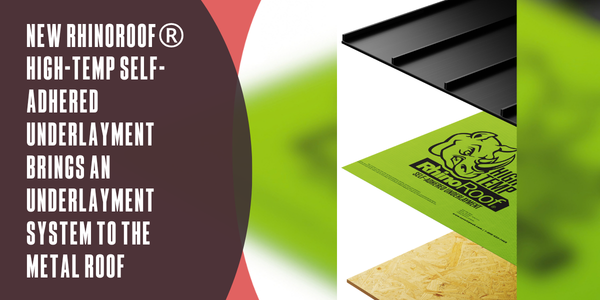
New RhinoRoof® High-Temp self-adhered underlayment brings an underlayment system to the metal roof
Read More ...
UP TO THE MINUTE






Comments
Leave a Reply
Have an account? Login to leave a comment!
Sign In