UP TO THE MINUTE







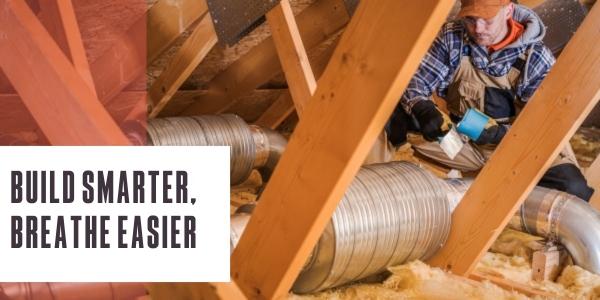
Build smarter, breathe easier
By Heidi J. Ellsworth.
Why balanced attic ventilation matters more than ever.
When homeowners plan a new build or roof replacement, attic ventilation rarely tops the priority list. While sometimes called out on architectural drawings, final attic ventilation decisions are often a low-engagement activities. Shingles, color choices and warranties tend to dominate the conversation. But according to the experts at Roof Saver, overlooking airflow above the ceiling can quietly undermine a home’s energy efficiency, moisture control, long-term structural integrity, and the health of its occupants. Contractors, often influenced by their suppliers, are important gate-keepers in many ventilation decisions, so it’s important those members of the construction team know the importance of their suggestions and choices.
Blocksom & Co., the U.S. based manufacturer behind Roof Saver, brings decades of experience in natural fiber building materials and ventilation products. Along with its sister company, Fiber Bond, Blocksom has developed a reputation for durable, code compliant solutions designed to improve building performance. Roof Saver reflects that legacy, delivering a static ridge vent product engineered to protect the roofing assembly from the inside out.
“Ventilation is one of the most overlooked components of a roofing system,” says Eric Pearman, sales development and digital marketing manager at Blocksom & Co. and Fiber Bond. “When you build smarter with balanced attic ventilation, you protect the roof deck, improve energy performance and create a healthier home environment. That’s exactly what Roof Saver is designed to do.”
Proper attic ventilation is not just about meeting building code requirements. It is fundamental to temperature and moisture control. Research and extension guidance from Texas A&M University emphasize that attic ventilation plays a critical role in regulating both heat buildup and moisture accumulation.
In summer, attic temperatures can soar to 150 to 160 degrees. Trapped heat radiates downward, forcing HVAC systems to work harder and increasing cooling costs. In winter, warm moist air from everyday activities like cooking, showering and laundry rises into the attic. Without adequate airflow, that moisture can condense on insulation and framing, leading to compromised insulation performance, mold growth, wood rot and poor indoor air quality. Balanced ventilation reduces these risks by allowing hot, moist air to escape naturally while drawing in fresh air from intake vents.
There are two primary approaches to attic ventilation: static and dynamic systems. Static systems, such as ridge and soffit vents, rely on natural air movement. Installed along the roof peak, ridge vents work in combination with soffit vents to create continuous intake and exhaust airflow without electricity or mechanical parts. This passive design means fewer maintenance issues and no added ventilation energy consumption.
Dynamic systems, including powered attic fans and roof mounted power vents, actively force air out of the attic. While they may appear to provide quick airflow, studies and field observations have raised concerns. Some systems can draw conditioned air from the living space into the attic, reducing energy efficiency. In certain cases, improperly balanced systems may create pressure differentials that negatively impact indoor air quality. Research from the Florida Solar Energy Center has shown that passive ridge and soffit ventilation systems can effectively exhaust solar heated air from attics, helping reduce heat transfer into the living space below.
Roof Saver is designed specifically for steep slope roofing systems to promote consistent balanced airflow when used with adequate intake ventilation. Its low-profile design blends into the ridge line, preserving curb appeal while delivering performance. Unlike bulky gable vents, turbine vents, slant-back, or pot vents that interrupt roof aesthetics, ridge vents remain very inconspicuous once installed.
Beyond appearance, Roof Saver is built for durability and long-term reliability. Independent ICC-ES testing, Miami-Dade acceptance, broad code compliance across the U.S., and a 40-year warranty support its performance claims. The product’s lightweight construction makes it easy to handle and ship, giving contractors flexibility whether ordering by the box or by the pallet.
“Roof Saver is about performance without complexity,” Eric explains. “It’s a static system that works with natural airflow. No motors, no maintenance headaches, just dependable ventilation that’s affordable, easy to install, and contributes to a high-quality, trouble-free roofing assembly.”
As energy efficiency standards tighten and homeowners become more aware of indoor air quality, ventilation is gaining the attention it deserves. A well-ventilated attic protects insulation, extends roof life and helps regulate interior comfort. For contractors, specifying a high-quality ridge vent is not just an accessory decision, it is a performance-driven system decision that directly impacts long term health of the building and its occupants.
Learn more and connect directly with the manufacturer!
About the author
As CEO of The Coffee Shops, Heidi has been working and writing in the construction industry for over 30 years. She is active in many associations including founding National Women in Roofing and Roofing Technology Think Tank (RT3). She is passionate about helping to shine a light on the construction industry and creating win-win-win scenarios!
Learn more about Roof Saver in their Coffee Shop Directory or visit roofsaver.com.
About the author

As CEO of The Coffee Shops, Heidi has been working and writing in the construction industry for over 30 years. She is active in many associations including founding National Women in Roofing and Roofing Technology Think Tank (RT3). She is passionate about helping to shine a light on the construction industry and creating win-win-win scenarios!
Recommended For You

Profit Power events this October
Read More ...
Stormseal named finalist in leading technology competition
Read More ...
High value on low pitch roofs with composite slate
Read More ...
UP TO THE MINUTE
Comments
Leave a Reply
Have an account? Login to leave a comment!
Sign In