UP TO THE MINUTE







Condensation control starts at the roof in cold storage design
By Jesse Sanchez.
Learn how air movement, enclosure detailing and material selection shape condensation risk and long-term roof system performance.
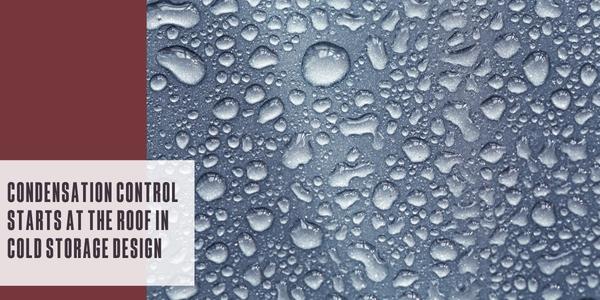
Condensation inside refrigerated processing and cold storage facilities is a leading cause of system deterioration and failure. As companies like Benchmark have observed in industrial environments, when moisture comes into contact with cold building components, it can quickly form water or ice, creating food safety concerns, accelerating steel corrosion and weakening the overall roof assembly.
This vulnerability is rooted in the extreme conditions these facilities are designed to maintain. Interior environments commonly operate below 50 degrees Fahrenheit, with some spaces reaching as low as minus 50. Within that range, even minor gaps in the building enclosure, especially at roof transitions, penetrations and terminations, can allow moisture-laden air to enter, setting off a cycle of condensation that is difficult to control once established.
Understanding how that cycle begins is essential. Condensation in these environments is driven by three primary mechanisms: infiltration, conductance and saturation. While each plays a role, infiltration consistently presents the greatest risk because it introduces both air and moisture into the system. As warm, humid air moves through unsealed transitions into a refrigerated space, it is drawn toward colder surfaces, where it cools to the dew point and releases moisture. The result is condensation or ice formation, often concentrated on steel components within the roof system.
Operational conditions further intensify that dynamic. Mechanical cooling systems frequently create negative pressure, pulling outside air into the enclosure through even the smallest openings. At the same time, routine activity, such as door openings between cold and adjacent spaces, introduces repeated bursts of warm air, increasing moisture loads and placing additional strain on both the roof assembly and mechanical systems.
Although infiltration drives the majority of failures, conductance and saturation remain important contributors. Conductance occurs when materials such as steel beams or roof joists extend between warm and cold environments, creating localized condensation on the warm side. Saturation, while less common, develops when interior humidity approaches the dew point, often during maintenance activities or mechanical disruptions, resulting in more widespread moisture or ice accumulation.
Because air movement is the primary pathway for moisture, effective control depends on continuity. A properly designed air barrier, located at the pressure boundary where the roof membrane meets walls, penetrations and terminations, is critical to preventing infiltration. Equally important is the use of materials that can maintain flexibility, durability and a secure seal over time, ensuring that the system performs as intended under demanding conditions.
Ultimately, condensation control is not achieved through a single detail but through coordinated performance across the entire enclosure. When roof systems are designed and installed with airtight continuity in mind, facilities are better positioned to maintain stable interior conditions, protect structural components and avoid costly, preventable failures over the life of the system.
Learn more about Benchmark in their Coffee Shop Directory or visit www.benchmark-inc.com.
About the author

Jesse is a writer for The Coffee Shops. When he is not writing and learning about the roofing industry, he can be found powerlifting, playing saxophone or reading a good book.
Recommended For You

UP TO THE MINUTE
Comments
Leave a Reply
Have an account? Login to leave a comment!
Sign In