
Creating a digital golden thread for roofing materials
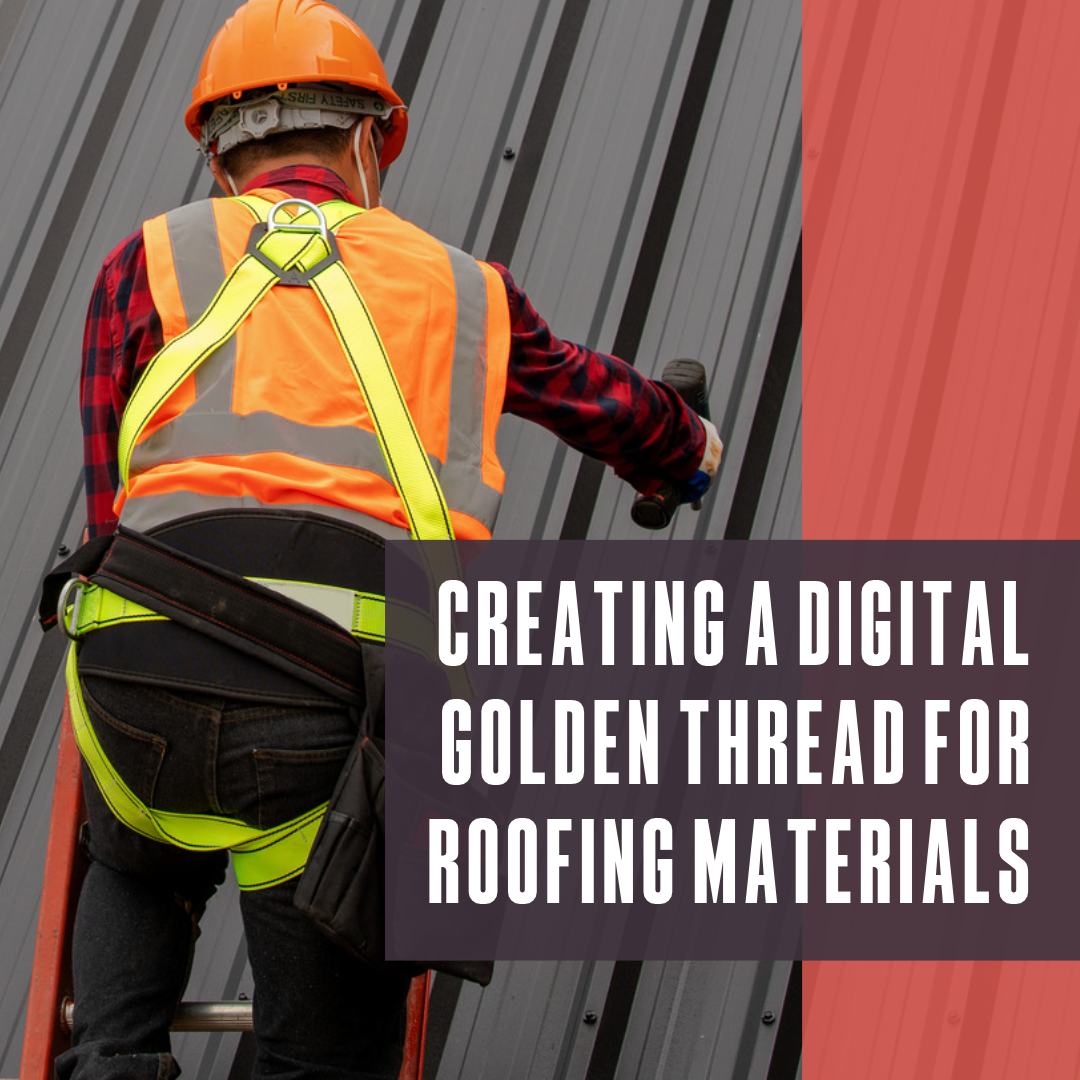
By Rob Ellinor, Domino Printing Sciences.
Emerging traceability requirements could help create trusted digital records of roofs and roofing materials, accessible long after installation.
New regulations designed to improve building safety, sustainability and accountability will demand significantly improved traceability of materials from design through to deconstruction – with roofing manufacturers, suppliers and contractors feeling the effects.
The upcoming EU Construction Products Regulation (CPR) will require digital records for construction materials that remain accessible throughout a building’s lifecycle. This could cover everything from fasteners, fixings and roof membranes to insulation and solar roofing components.
Roofing industry professionals may wonder how to implement traceability systems that are accessible and can last the life of the building. Roofing materials can remain in service for decades, with many being entirely concealed following installation, so it can be difficult to know exactly what was installed, where, and when.
The uncertainty behind how to trace a product after installation is exactly the kind of issue that the CPR hopes to overcome. In the U.K., the need for improved traceability is already understood, with the so-called ‘golden thread’ of data describing a digital record of a building’s crucial safety and design information.
A digital, golden thread of data would help the roofing industry to comply with upcoming and future regulations and create additional benefits for everyone involved in the manufacture, supply, installation and lifecycle of roofing products.
Building a digital record of roofing products
The EU CPR has the potential to affect the manufacture and supply of all roofing materials; however, currently, there is no specific blueprint with regard to how the traceability data should be linked to specific products.
The lack of a blueprint may seem concerning or confusing for businesses, but the industry isn't starting from scratch.
Building Information Modelling (BIM) has already helped establish a framework for capturing and sharing design intent; however, maintaining accurate records over a building’s lifetime remains a challenge. This is because BIM models often rely on product identifiers that are unique to a project, but without any way of tracing specific, installed products back to the manufacturer.
When installing roofing products, items may be substituted during installation, for example, a different type of roofing membrane could be installed to reduce escalating project costs or due to shortages. This information would likely be stored somewhere, perhaps in an email or production order, but it wouldn't necessarily be captured in the BIM, creating a disconnect between the digital record and the materials installed.
So, how do you reliably connect information stored in a BIM to the materials installed in a roof so that the information can be accessed and understood decades after construction? The answer lies in the use of globally recognised, accessible industry standards, such as 2D codes powered by GS1.
GS1-powered 2D codes allow a product tagged at the point of manufacture to carry a universally recognised identifier – such as a product GTIN. Items with GS1-powered 2D codes can then be scanned at delivery and again at installation, permanently locking the item’s identity into the building’s digital record.
What does this mean for roofing materials providers and manufacturers?
Applying GS1-powered 2D codes to roofing materials and packaging will affect everyone in the roofing industry, from manufacturers and contractors to project and building managers.
At the brand level, the journey will begin with establishing a cross‑functional team to define the objectives for introducing 2D codes and determine what data to include in codes applied to specific product ranges.
The 2D code content may vary by product and application, but will generally include the product’s brand name, key attributes and unique Global Trade Item Number (GTIN). Materials suppliers can also use the codes to provide access to other product information, such as usage and installation instructions, durability and maintenance requirements, compliance data and product specifications.
For low-value, mass-produced items such as pins or even tiles, 2D codes may be needed only at the batch level, with codes applied to packets or pallets. Higher-value products such as solar panels could be serialised with unique on-product codes.
Manufacturers producing roofing materials will need to ensure their production lines can create and apply 2D codes on products and packaging. This includes coding, marking and product-handling systems designed for high-quality, compliant 2D codes, as well as machine vision systems to check and verify code quality.
Creating value across the roofing lifecycle
When equipped with 2D codes, roofing products and other construction materials will become smart objects capable of supporting real-time process management to improve day-to-day operational performance.
Real-time scanning of roofing materials as they are installed can help to ensure the correct parts are used across a building project. For example, a roofing membrane, insulation product or solar roofing component could be scanned before installation, linking that product to a specific location, installer and installation date as a digital building record.
Contractors may initially view scanning as extra work, but it can ultimately simplify not only compliance but also a range of administrative tasks. When required, contractors can provide site inspectors with accurate digital twin data, enabling faster inspections and sign-off.
Long-term benefits
By providing a clear, traceable link between product manufacturers, installed items and a physical building, GS1-powered identifiers can create a lifetime digital twin of a building. The digital twin could prove a building meets required standards, improve accountability across the sector and make it easier to manage buildings long after a construction project has been signed off.
For example, building managers could access information to support building care and maintenance, such as finding replacement tiles that match not just the style but the exact colour of previously installed roofing. The same information could be used to resolve warranty or maintenance disputes – by providing information on exactly when a product was produced, accepted onto site, installed and signed off. For high-value items such as solar panels, this information can help with sourcing parts for repair or refurbishment.
Conclusion
A digital, golden thread of data for the roofing industry will require a universally trusted and recognised language that everyone can use and understand – such as that provided by 2D codes powered by GS1.
When used in conjunction with digital information management systems, such as BIM, GS1 2D codes will help to create a trusted digital thread to link physical roofing products to a permanent, verifiable record of a building.
Find out how you can print GS1 2D codes without compromise: https://dmnoprnt.com/3dnkh4fj
About Rob Ellinor
Rob Ellinor is the global building and construction sector manager for Domino Printing Sciences.

Recommended For You

From estimating to ordering in one easy tool!
Read More ...
Programa de certificación de contratistas de CertainTeed®
Read More ...
Contractors are driving the next wave of construction technology
Read More ...
UP TO THE MINUTE






Comments
Leave a Reply
Have an account? Login to leave a comment!
Sign In