

Essential safety tips for your next paving project

By Troy Kaiser, Benchmark.
Five key practices to improve safety and efficiency on-site.
Safety is a priority in paving projects and following proper safety protocols is key to achieving a successful and accident-free outcome. Benchmark highlights five crucial safety guidelines that can greatly improve both safety and efficiency on your next paving job. By applying these best practices, teams can minimize hazards, streamline operations and create a safer work environment for everyone on-site.
 1 – The work area is barricaded from the traveling public (vehicle and pedestrian traffic)
Separating the traveling public from the work zone and workers is safer for everyone involved. Good traffic control keeps the public away from the dangers in the work zone and keeps workers safe from public traffic.
Barricaded zones are marked for everyone's safety.
2 – Develop a site-specific safety plan
Take the time to come up with a solid safety plan, covering the high-level issues you will face day to day. Make sure everyone is aware of the safety plan, what is required on their part, and what to do if something unexpected occurs. Communication of this plan is key. As we look out over the industry today, safety is a focus for everyone! One safety event can make for a failed project, even if you completed it under budget and faster than planned.
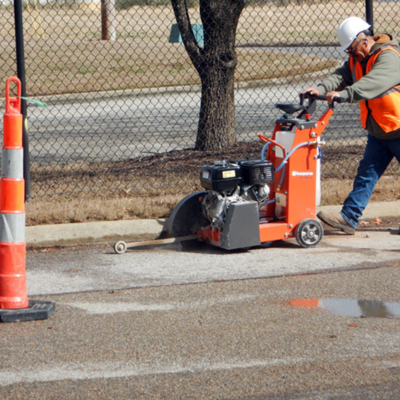 3 – Workers have proper personal protective equipment (PPE)
Workers with clean, bright safety vests are easier to see by equipment and truck operators, as well as by the traveling public. Vests should be a different color than the barrels or barricades to keep workers from blending in with their surroundings.
When doing different tasks, workers should have appropriate PPE for the work being done. For example, workers using cutting tools should have safety glasses and a face shield. Hard hats should be worn while working around excavation equipment that is reaching into the air to load materials. Hearing protection should be used around all loud equipment. Steel toe shoes protect from falling objects and can protect from impact, punctures or cutting hazards.
4 – All equipment has working backup alarms
By far, the most dangerous area on a paving project is behind any equipment or truck that could back up at any moment. It is good practice to require that all trucks and equipment have working backup alarms and to ban any equipment with a defective alarm until the alarm is repaired.
5 – Only qualified personnel should operate trucks and equipment
Your paving project should not be used as a training opportunity for the contractor. All operators and truck drivers should be properly trained and familiar with the equipment that they are operating. By adhering to these safety best practices, your next paving project can proceed smoothly and safely, protecting the crew, employees and the public from potential hazards. Adopting these practices promotes a safe work environment, efficiency and ultimately a successful project while safeguarding all involved.
Original article and image source: Benchmark
Learn more about Benchmark in their Coffee Shop Directory or visit www.benchmark-inc.com.
Recommended For You

How to Prevent Wildfire Damage
Read More ...
Step right: Preventing foot injuries in roofing
Read More ...
Stop the snap: Hose whipping hazards on roofing sites
Read More ...
UP TO THE MINUTE






Comments
Leave a Reply
Have an account? Login to leave a comment!
Sign In