UP TO THE MINUTE






Groundbreaking Knowledge Transfer Partnership converts construction waste into green economic solutions
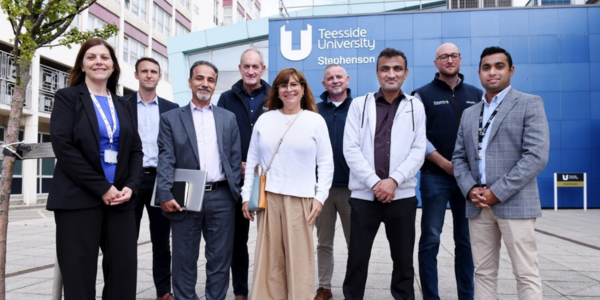
Teesside University has entered into a research partnership with Welsh resource management firm Dauson Environmental Group (DEG) which has the potential to reshape the landscape for sustainable building materials and low-carbon infrastructure across the United Kingdom.
Teesside University has entered into a research partnership with Welsh resource management firm Dauson Environmental Group (DEG) which has the potential to reshape the landscape for sustainable building materials and low-carbon infrastructure across the UK.
The Knowledge Transfer Partnership is investigating how to utilise construction waste within cement and concrete products.
According to the European Commission and recent global studies, cement production exceeds 4.1 billion tonnes annually, contributing over 3.3 billion tonnes of CO₂ emissions when accounting for lifecycle impacts.
Market estimates suggest the cement market was worth $506 billion in 2024 and is projected to reach $686 billion by 2032, intensifying demand for low-carbon alternatives.
This demand creates a pressing need to develop sustainable, high-quality alternatives that meet BS EN450 standards (a British and European standard that defines the requirements for fly ash used as a concrete additive) for concrete and deliver substantial car bon savings.
In regions such as Wales and Southwest England, a 30 percent replacement in cement usage equates to nearly 300,000 tonnes of demand, highlighting the scale of opportunity for new materials.
In collaboration with Middlesbrough-based Teesside University, DEG will utilise construction waste for ultra-low carbon supplementary cementitious materials (SCMs) and concrete products.
This will simultaneously add value to an otherwise unwanted product, reduce the necessity for landfill and support the reduction of carbon emissions.
The initiative complements DEG’s drive toward a 100 percent recycling model and positions the company at the forefront of circular construction and decarbonisation.
Dr Sina Rezaei Gomari, associate professor of research at Teesside University and project lead, said: “This initiative not only enhances the value of industrial waste but aligns with broader sustainability targets. By applying advanced, energy-efficient technologies, we’re setting a new benchmark for waste valorisation, creating scalable solutions with potential far beyond DEG.”
Dr Ahlim Hashm, DEG’s technical director and industry supervisor on the project, added: “This partnership strengthens our ability to meet environmental regulations and unlock new revenue through carbon trading. It places DEG at the heart of the global movement toward carbon reduction.”
Company chairman David Neal, who grew DEG from a family-run business to a multimillion-pound enterprise, noted: “This project incorporates our commitment to sustainability and innovation. These processes don’t just reduce carbon emissions, they optimise energy use, supporting our mission to achieve 100 percent waste recycling and minimise environmental impact.”
The project aligns closely with the University’s strategic ambitions to be a national frontrunner in sustainability, combining academic excellence with real-world impact. As carbon regulation intensifies and markets increasingly reward greener solutions, this partnership stands as a bold example of how universities and industry can co-create technologies that benefit both people and planet.
Professor David Hughes, associate dean of research at Teesside University and project co-lead, highlighted the broader impact: “This initiative directly supports global sustainability targets while showcasing Teesside University’s leadership in environmental research. It reflects our commitment to responsible innovation and our role in tackling some of the most pressing challenges of our time.”
Recommended For You

The contractor’s role in asphalt shingle recycling and sustainability
Read More ...
Solar smarts: Texas-assembled* attic fans catching a nationwide tailwind
Read More ...
Owens Corning Publishes 2022 Sustainability Report
Read More ...
UP TO THE MINUTE
Comments
Leave a Reply
Have an account? Login to leave a comment!
Sign In