UP TO THE MINUTE






Measuring polyiso the right way
By Hunter Panels.
Understanding ASTM-aligned thickness verification can strengthen contractor confidence in product performance and jobsite quality.
Precise insulation measurements are critical to project accuracy and Hunter Panels is helping contractors approach the methods of calculation with clarity and confidence. As rigid polyiso continues to play a central role in energy-efficient roof assemblies, knowing how to verify thickness correctly in accordance with ASTM C1289 safeguards against guesswork and supports quality control on the job. That attention to detail reflects positively on both the manufacturer and the installer, reinforcing trust in the product while ensuring specifications are met with professionalism and accuracy.
How to measure polyiso thickness (ASTM C1289 method)
1 – Cut the board properly
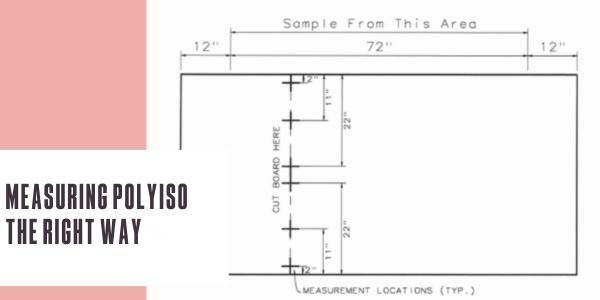
Cut the board down the middle of the 4-foot dimension so you end up with two pieces measuring 2 ft × 8 ft.
- Avoid using a razor knife for measurement cuts.
- A clean, smooth cut is necessary to expose a true cross-section of the foam.
- A caliper is the preferred measuring tool to ensure accuracy.
2 – Take six (6) thickness measurements
ASTM C1289 requires multiple measurements to account for natural surface variation. Take readings as follows:
- Start at least 1–2 inches in from the edge (never on the outer edge).
- Take measurements approximately every 2 feet along the board.
- Ensure one measurement is taken at the center of the board.
- This results in six total measurements.
3 – Calculate the average thickness
After collecting all six readings:
- Add all measurements together
- Divide by six to obtain the average
- Compare the calculated average to the manufacturer’s stated thickness
4 – Verify ASTM tolerance compliance
The final average must fall within ±1/8 inch of the labeled product thickness to meet ASTM C1289 requirements.
In summary, measuring polyiso insulation in accordance with ASTM C1289 is straightforward when you use the correct tools, follow consistent sampling procedures and take measurements in the right locations. By cutting a clean sample, taking six properly spaced measurements and calculating an accurate average, you can confidently verify that the insulation meets ASTM standards and project specifications.
Original article source: Hunter Panels
Learn more about Hunter Panels in their Coffee Shop Directory or visit www.hunterpanels.com.
Recommended For You
MCA Publishes New White Paper: “Best Practices – General Maintenance on Factory Metal Forming Equipment”
Read More ...
A cleaner approach to jobsite protection
Read More ...
What Makes the Windsor® Designer Shingles?
Read More ...
UP TO THE MINUTE
Comments
Leave a Reply
Have an account? Login to leave a comment!
Sign In