UP TO THE MINUTE






The hidden key to sustainable roofing
By AkzoNobel.
How advanced coatings are transforming energy efficiency and emissions reduction.
In the race toward sustainability, every industry must pull its weight — but some contributions go unnoticed. Coil coatings, often overlooked in discussions about green building materials, play a crucial role in reducing emissions, enhancing energy efficiency and shaping the future of sustainable construction. As environmental regulations tighten and consumer expectations rise, coil manufacturers must innovate, or risk being left behind. How can these coatings drive a cleaner, more efficiently built environment? According to AkzoNobel, the answer lies in cutting-edge chemistry, forward-thinking design and a commitment to circularity.
Metal building materials producers and consumers grapple with changing ESG standards. They must manage and measure their ESG performance, providing emissions data to regulators, customers and suppliers. Additionally, they face potential re-classification of critical raw materials, like fluoro-polymers in coil coatings.
Companies may be required to report annual carbon footprint reductions from cradle to grave and cradle to gate. They must also disclose emission data for all products sold. Customer expectations are rising for coil manufacturers to offer sustainable solutions. The demand for greener urban spaces grows, without compromising performance.
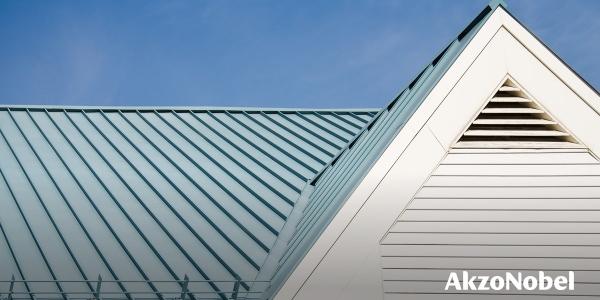
To reduce emissions, coil producers can use modern cool chemistry coatings (like the ones provided by AkzoNobel). These coatings, with heat-reflective pigments, insulate buildings against extreme weather, curbing energy consumption and CO2 emissions.
Coil producers can further contribute by reducing their own energy consumption during production. CEPE research shows that most emissions from coated steel cladding come from steel substrate production, which can be recovered and reused. Coating energy consumption is relatively small, mainly from the curing process.
To enhance energy efficiency, coil producers can explore infrared and induction-type ovens. In the future, electron beam radiation coatings may reduce energy use by five to nine times compared to thermal ovens. AkzoNobel’s commitment extends to Scope 3 reductions and providing emissions data to support customer sustainability goals.
Original article and photo source: AkzoNobel
Learn more about AzkoNobel in their Coffee Shop Directory or visit coilcoatings.azkonobel.com.
Recommended For You

Top 3 Reasons Why Cities are Mandating Green Roofs
Read More ...
The Roofing Industry Responds to Climate Change
Read More ...
How cool roofing can help reduce energy costs
Read More ...
UP TO THE MINUTE
Comments
Leave a Reply
Have an account? Login to leave a comment!
Sign In