UP TO THE MINUTE





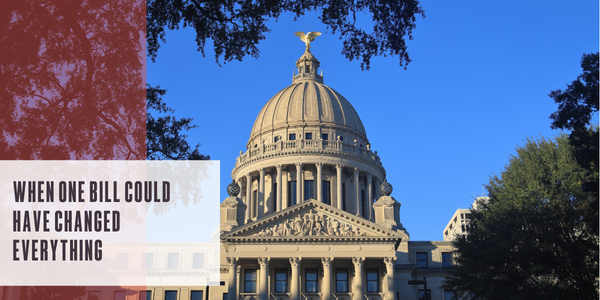
When one bill could have changed everything
By Dani Sheehan.
This is advocacy in action. See what Mississippi’s House Bill 1730 means for commercial contractors.
Earlier this year, a piece of legislation in Mississippi quietly gained momentum, but its impact would have been anything but quiet for roofing contractors. Mississippi House Bill 1730 (HB 1730) proposed a seemingly straightforward requirement: all new publicly funded buildings must have a minimum roof slope of 3:12. This would have reshaped how public buildings are designed and roofed for Mississippi and potentially elsewhere.
A simple requirement with complex consequences
For anyone in commercial roofing, the implications of this bill are clear. A 3:12 minimum slope would have effectively eliminated low-slope roofing systems from publicly funded projects like schools, hospitals and government buildings. What made the proposal especially challenging wasn’t just the restriction itself, but what it overlooked. Low-slope systems have a long, proven track record. They’re widely used because they work – both from a performance standpoint and a cost perspective.
By introducing a one-size-fits-all requirement, the bill risked creating a ripple effect: limiting design flexibility, conflicting with established building codes and potentially increasing costs without delivering measurable benefits.
When the industry comes together
As the bill moved through the Mississippi House, the response from the roofing industry was swift and unified. The Roof Coatings Manufacturers Association (RCMA) joined forces with the National Roofing Contractors Association (NRCA) and the International Institute of Building Enclosure Consultants (IIBEC), working alongside the Coalition for Sustainable Roofing to present a clear message to lawmakers.
Roofing systems, they explained, aren’t interchangeable. The right solution depends on the building, the environment and the intended use. Mandating a single approach ignores the realities contractors and designers navigate every day. By backing that perspective with technical data, real-world performance history and practical cost considerations, the coalition helped to reframe the conversation.
After passing the House, HB1730 ultimately failed to advance in the Senate, halting the mandate before it could take effect. This is a huge win for contractors in Mississippi, whose projects can continue to be designed with the flexibility they require, using systems that make sense for each building. Just as importantly, it avoids introducing unnecessary cost pressures on publicly funded construction, where budgets already face scrutiny.
Why this moment matters beyond Mississippi
It would be easy to see this as a localized issue and move on, but the broader implications tell a different story. At its core, this was a question of who gets to shape roofing decisions. When policies are created without input from the people doing the work, they risk missing the mark in ways that might easily be overlooked. This outcome reinforces the value of contractor expertise in those conversations. It also protects something fundamental to our industry: the ability to choose the right system for the job.
There’s also a bigger takeaway in how this unfolded. No single company or organization drove the result. It was the alignment of manufacturers, contractors, consultants and associations speaking with a consistent, fact-based message.
Legislation like HB 1730 often starts with good intentions. But as this situation shows, even well-meaning proposals can have unintended consequences when they don’t fully account for real-world applications. The impact of these decisions shapes the systems you can install, costs you have to manage and the way projects come together from start to finish.
When the industry stays informed, participates through trusted associations and brings field experience to the conversation, it can influence outcomes in meaningful ways. Mississippi is a clear example of that.
And it’s a reminder that protecting the integrity of our industry doesn’t happen passively – it happens when we choose to show up.
Learn more about Roof Coatings Manufacturers Association (RCMA) in their Coffee Shop Directory or visit www.roofcoatings.org.
About the author

Dani is a writer for The Coffee Shops. When she's not writing or researching, she's exploring new hiking trails or teaching yoga classes.
Recommended For You
Can’t-miss Speakers and Sessions at SRC Summit
Read More ...
SPFA and SFWW announce alignment to advance contractor company accreditation
Read More ...
Innovative Technologies for Sustainable Building Envelopes Course
Read More ...
UP TO THE MINUTE
Comments
Leave a Reply
Have an account? Login to leave a comment!
Sign In