
Why rooftop supports are getting stronger
By Jesse Sanchez.
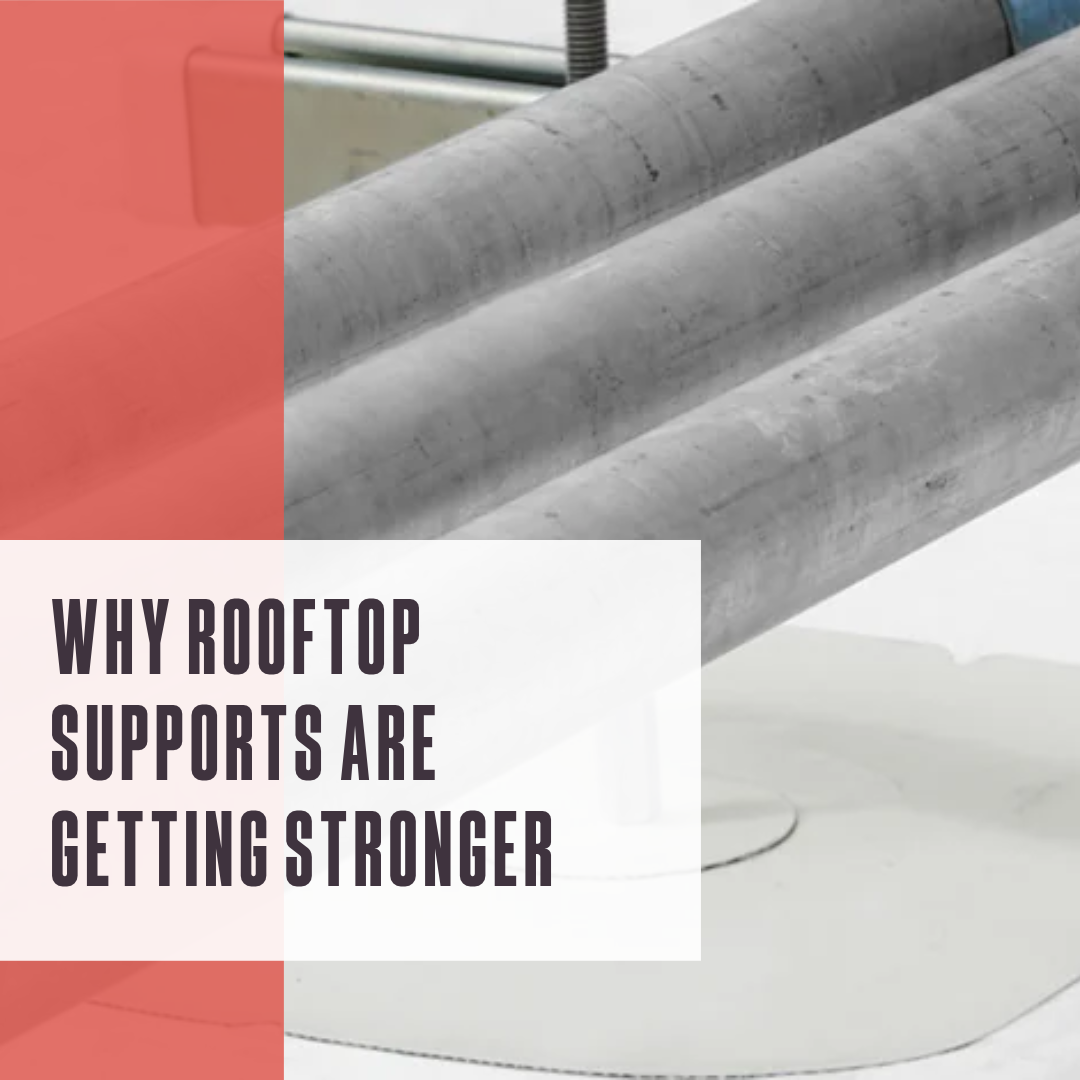
Severe weather, seismic forces and evolving codes are changing how rooftop piping and equipment are secured.
On this episode of Roofing Road Trips®, host Megan Ellsworth spoke with Mark Vargas, director of business development for AP Roof Services, the service side of Anchor Products, about how rooftop pipe and equipment supports have evolved from a secondary consideration into an engineered part of the roof system.
Mark’s experience with rooftop supports stretches back to the early 1990s, when non-penetrating systems commonly supported piping and equipment. At the time, systems could rely on wood blocking, plastic bases, rubber blocks or counterweights without being attached to the roof.
Over time, severe weather and seismic events exposed the true weaknesses in those approaches. Describing what contractors began seeing on rooftops, Mark explained, “Pipes started sliding across the roof. There was uplift forces that were loosening things on the roof that was causing damage to the membrane.” Those conditions could also cause supports to tip over or allow piping and equipment to become airborne, increasing the potential for roof damage.
Those failures contributed to changes in how rooftop supports are designed, specified and inspected. Mark noted, “Local jurisdictions started requiring everything on the roof to be attached,” including not only utilities but also the systems supporting them. As enforcement became more consistent, engineered attachment solutions increasingly became part of project requirements.
Today, that shift is evident in the applications Mark encounters. Reflecting on how dramatically the process has changed, he shared, “I don't see really many applications that come across my desk that don't have to be engineered anymore.” He contrasted that with earlier years when support systems could move from a basic sketch into production without engineering involvement.
At the same time, the industry has worked to balance securement with roof-system protection. Traditional attachment methods often require roof penetrations, creating concerns about leaks and warranties. Explaining the alternative approach, Mark said, “Now we can sit everything on top of a finished membrane with an approved component and as long as we're following the manufacturer's specification on how we apply that, we're covered under their warranty.”
Looking ahead, Mark expects rooftop support systems to continue emphasizing strength, simplicity, longevity, code compliance and compatibility with roofing systems as contractors, manufacturers and designers respond to changing performance requirements.
Listen to the podcast or Watch the conversation to learn more about how evolving codes, severe weather and engineering requirements are reshaping rooftop pipe and equipment support systems!
Learn more about Anchor Products in their Coffee Shop Directory or visit www.anchorp.com.
About the author

Jesse is a writer for The Coffee Shops. When he is not writing and learning about the roofing industry, he can be found powerlifting, playing saxophone or reading a good book.
Recommended For You

Why siding is a huge growth opportunity
Read More ...
Cool Roof Rating Council expands resources and industry engagement
Read More ...
Building a successful roofing business toolkit
Read More ...
UP TO THE MINUTE




Comments
Leave a Reply
Have an account? Login to leave a comment!
Sign In