

4 practical takeaways on what AI use looks like in practice
By The Coffee Shops™.
From marketing to operations, AI is beginning to reshape how roofing companies work — but success depends on how it’s used.
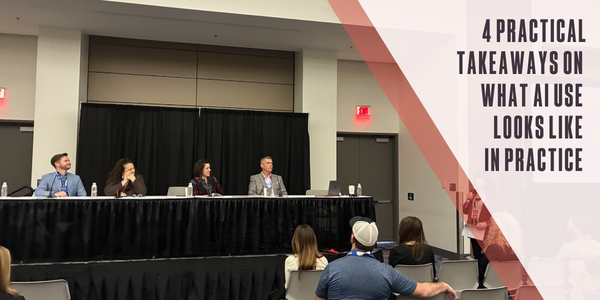
On the final morning of International Roofing Expo (IRE) 2026, a packed room of contractors, manufacturers and industry professionals gathered early for a timely conversation on artificial intelligence (AI). Hosted by Roofing Technology Think Tank (RT3), the panel brought together voices from across the industry to cut through the noise and talk about what AI actually looks like in practice.
Featuring Ken Kelly of Kelly Roofing, Wendy Marvin of Matrix Roof & Home, Anna Anderson of Art Unlimited and Josh Adams of Roof Scout, the discussion focused on how contractors can start using AI intentionally and effectively in their businesses today. Despite the early hour, the session sparked strong engagement and an active Q&A, signaling just how top-of-mind this topic has become across the industry.
1 – AI is a tool, and it’s only as good as how you use it
One of the clearest messages from the panel was that AI responds to direction. The more specific and thoughtful your input, the more useful the output. Ken compared AI to a golden retriever – eager to please, but unlikely to challenge you unless you ask it to. If you’re not getting the answers you need, it’s often a prompting issue, not a platform issue.
This requires a different way of thinking. Instead of asking quick, surface-level questions, users need to approach AI the way a customer might approach a search engine: with detailed, specific context and a clear goal in mind.
2 – The human element still matters
While AI can streamline workflows and reduce manual tasks, the panelists were quick to point out that it doesn’t replace the human side of the business.
Customers still want to work with people they trust. They want clear communication, accountability and relationships, especially for residential roofing. AI can support that experience, but it shouldn’t replace it.
Internally, AI can also help reduce common pain points. Instead of entering the same data across multiple systems or manually reviewing documents, teams can use AI to handle repetitive tasks more efficiently. Wendy stressed that not only saves time, but can also reduce the risk of human error.
3 – Without alignment, AI creates more problems than it solves
As more companies experiment with different AI tools, another challenge is starting to emerge: inconsistency. If everyone on your team is using different platforms in different ways, it becomes difficult to maintain a unified voice, protect your data and ensure reliable results. The panel stressed the importance of creating internal standards early.
That can be as simple as building a shared prompt library, documenting best practices or designating internal leaders to guide adoption like Josh and his team do. The key is making sure your team is working from the same playbook.
4 – Your data is your competitive advantage
Beyond the tools themselves, one of the most important takeaways from the discussion centered on data. Your customer information, job history and internal processes are some of your most valuable business assets. How you store, manage and use that data will directly impact how effective your AI tools can be.
The panelists warned against relying on free platforms for sensitive information. In many cases, data entered into free tools can be used to train broader models, making it accessible beyond your organization. Investing in secure, paid solutions, and understanding how your data is being used is critical. Owning your data means maintaining control, protecting your customers and positioning your business to adapt as technology continues to evolve.
This is an evolution, and it’s moving fast
While AI is often framed as a sudden disruption, this panel discussion offered a more grounded perspective. From business-to-business and business-to-consumer interactions, the industry is now beginning to explore business-to-agent workflows, where AI systems communicate with one another to complete tasks, according to Anna. Whether it’s processing information, analyzing documents or supporting decision-making, these tools are becoming more integrated into everyday operations.
Discussions like the RT3 panel are exactly what this organization was created to support. As a consortium of industry thought leaders, RT3 is focused on exploring emerging technologies and helping contractors understand how to implement them in practical, meaningful ways.
By bringing together perspectives from inside and outside the roofing industry, RT3 provides insight, resources and real-world context to help businesses navigate change.
Start small, stay intentional
For contractors looking to get started with AI, the message from this discussion was clear: you don’t have to do everything at once.
Start with one or two areas where AI can make an immediate impact. Build consistency within your team, protect your data and refine your approach as you go. AI isn’t replacing anyone. But it is changing how work gets done. Those who take the time to understand it and can use it intentionally will be better positioned for what comes next.
Learn more about Roofing Technology Think Tank (RT3) in their Coffee Shop Directory or visit www.rt3thinktank.com.
Recommended For You

Finding the intersection of roofing and solar
Read More ...
It takes more than a hard hat to protect a head
Read More ...
Wagner Roofing is the October Roofer of the Month!
Read More ...
UP TO THE MINUTE






Comments
Leave a Reply
Have an account? Login to leave a comment!
Sign In