UP TO THE MINUTE






Can homes have flat roofs? - Part 2
By IKO Industries.
Unlock a world of design options with one of these eight flat roofing options!
Editor’s note: Share this article with home- and property-owners who are choosing a roof design for a new home or replacing/repairing a current flat roof.
In the first part of this article, we covered how flat roofs can be used for more than just commercial, industrial and institutional buildings (on structures such as malls, warehouses, apartment buildings, hospitals and schools), they can be a great option for residential homes. But every home is unique and if you’re looking at installing a flat roof it’s important to make sure you’re picking the right one.
There are a wide variety of materials that contractors can make a flat roof out of, each with unique advantages and drawbacks. Keep reading to learn from our IKO Industries experts about eight of these material types and how they are designed to protect and reinforce a roof!
 1 - Built up roofing (BUR)
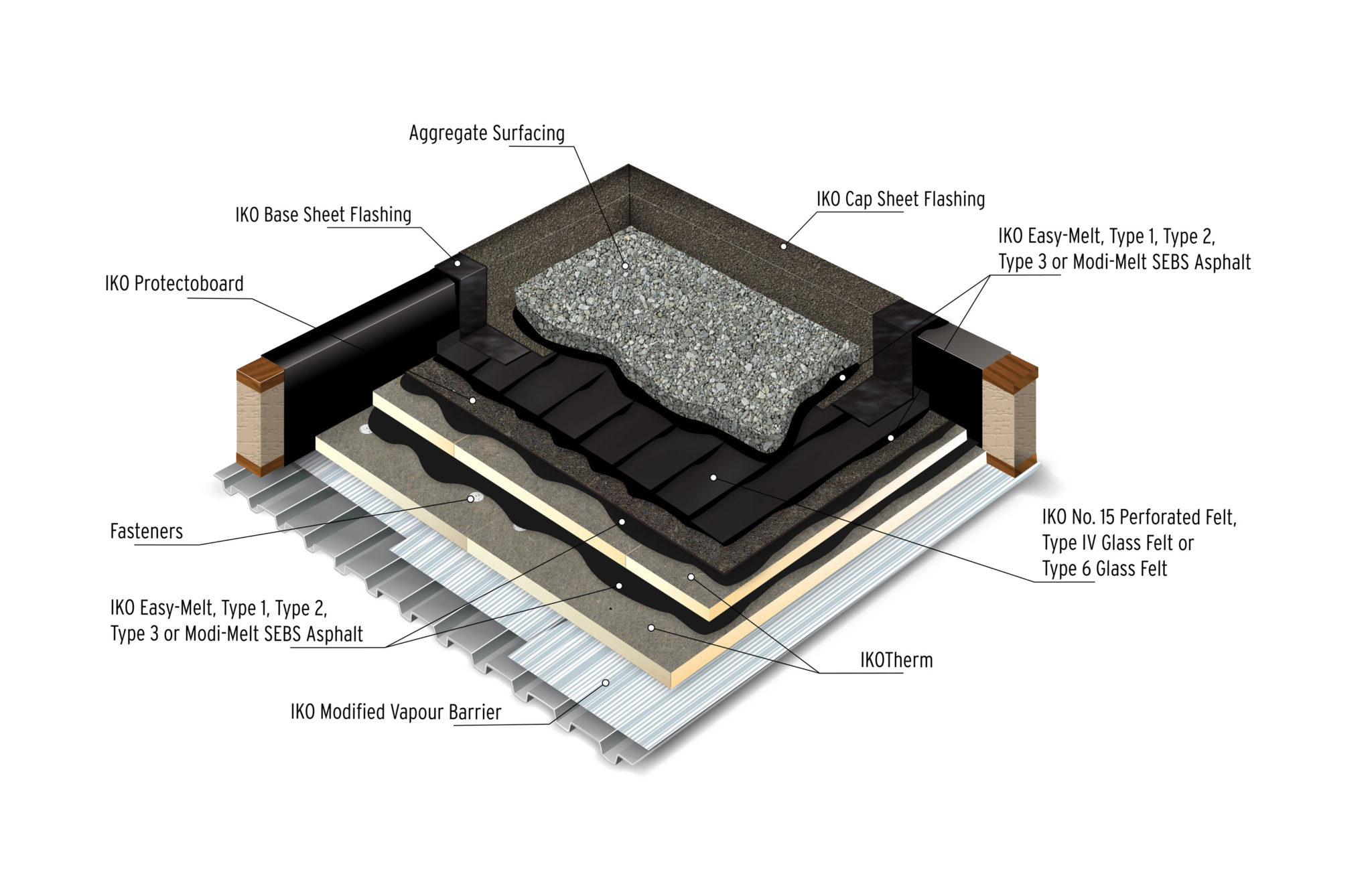
This multi-layer roof design is a proven system that has been around for generations. BUR is found in many low slope residential and commercial roofing applications.
Materials
- Alternating layers of roofing felt (usually fiberglass) and hot-applied asphalt
- The final layer of asphalt is topped with gravel or other chipped minerals for several reasons: to protect the asphalt from the sun’s ultraviolet rays, fireproof the material and add weight to secure the roof membrane.
Advantages
- Tried and true for decades
- Considered the most affordable option
- Durable, lasting
- Redundant (if one layer fails there are more layers underneath to provide immediate protection)
- Top layer of light gravel gives an appealing look and reflects the sun
Disadvantages
- Hot, messy and slow installation
- Heavy, adds weight to the structure, which must be accommodated
- Difficult to remove
- Difficult to detect and repair leaks due to multiple layers of material
How it’s applied
- A layer of roof felt is laid down and hot asphalt is mopped overtop – repeat for two to four layers (called plies)
- Repair involves reapplication of original materials and/or roofing cement to fix cracks or leaks
 2 - Single ply membranes
In the last 30 to 40 years, these membranes have gained popularity as a single-layer, watertight alternative to traditional built-up flat roofs.
They take less time to apply and although they can be somewhat more expensive, they remain within 10% to 20% of the cost of other methods. Single Ply membranes come in a variety of mil thicknesses, including 45, 60, 80 and 90 mils. Because they are applied in a single layer on often expansive roofs, they come in large rolls which may require the use of heavy equipment to get the product to the rooftop.
3 - Thermoset (synthetic rubber)
Materials
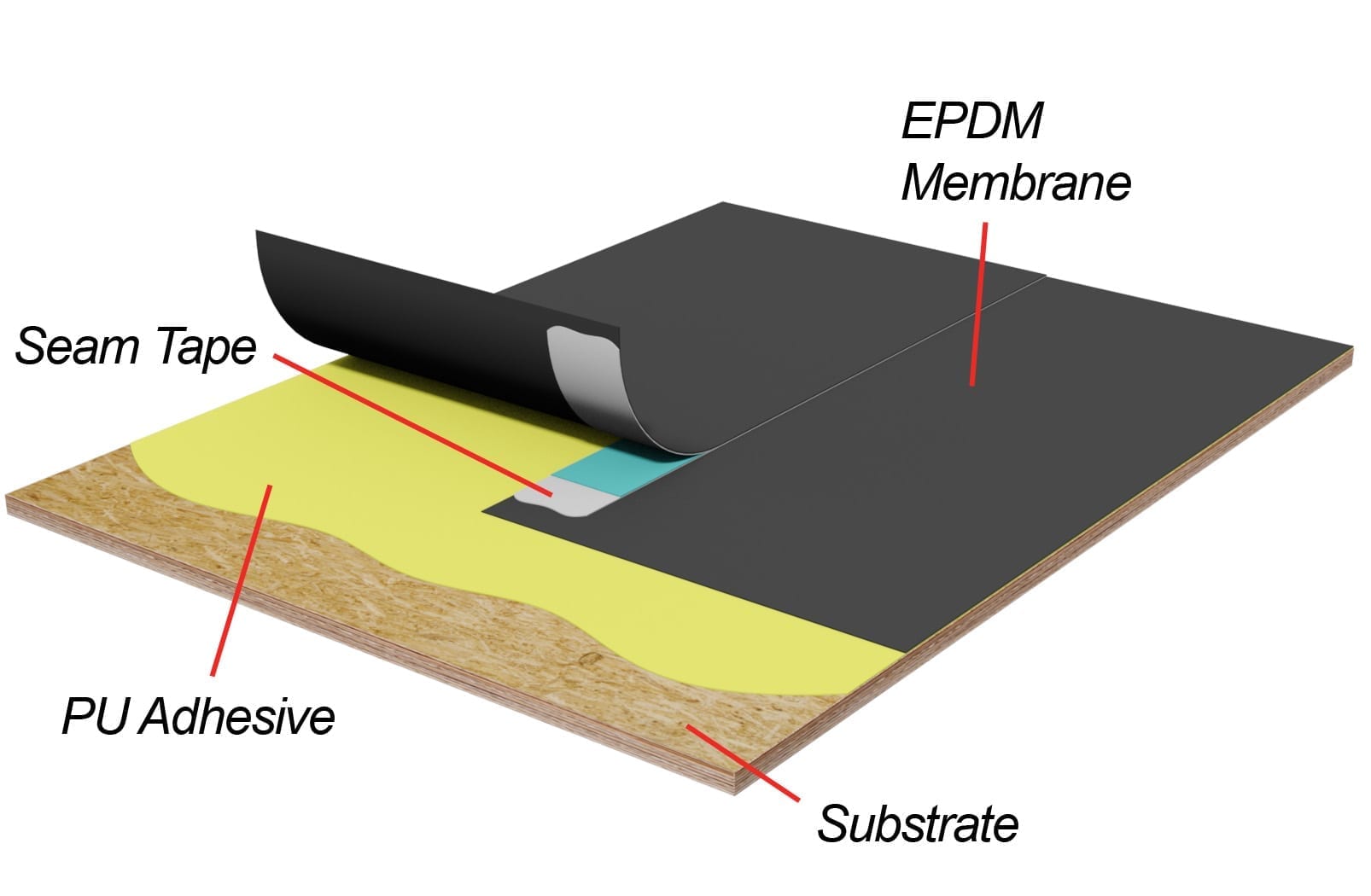
- EPDM (Ethylene Propylene Diene Monomer)
 Advantages
- A flexible synthetic rubber that can be resistant to the sun’s rays (white EPDM) and weathers well against the elements
- Popular and trusted in the commercial market (40% of roofing systems are made with this material)
- Easy to apply
- Hearty and puncture- resistant
Disadvantages
- As with all single- ply flat roof membranes, this roofing material doesn’t have the security of extra layers like BUR systems, so extra caution must be paid that the material isn’t punctured or damaged during installation or repair
- There can be some vulnerability where the seams are cemented/taped together
How it’s applied
- This is installed by taping or cementing its seams
- It’s secured either mechanically, with adhesive or using a ballast material (such as paving stones, gravel or green roof vegetation)
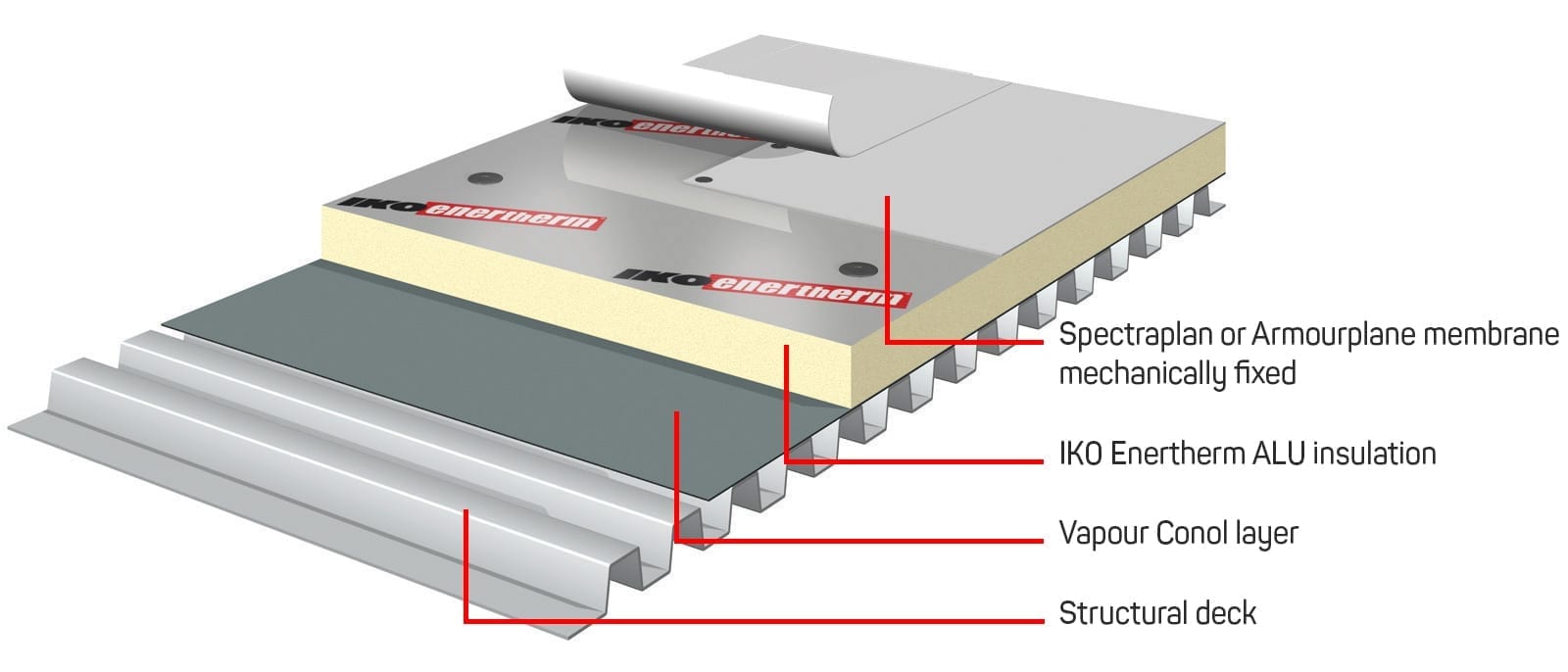 4 - Thermoplastic
Material 1
- PVC (Polyvinyl chloride)
Advantages
- Thick and protective, this vinyl product is reinforced with fiberglass or polyester to be long-wearing and resistant to penetration
- It is fire-resistant and UV-resistant
Disadvantages
- Contains a lot of chemicals (such as chlorine), making it less popular among builders seeking a greener alternative
How it’s applied
- Hot welded or taped at the seams; fastened either mechanically, with adhesive or using ballast
Material
- TPO (Thermoplastic polyolefin)
Advantages
- Considered environmentally friendly because it doesn’t contain chlorine
- Flame-retardant and sun-reflecting
- Long-lasting, sturdy and penetration proof
Disadvantages
- Because TPO is a newer product, it hasn’t been time-tested over many decades
- Be sure the contractor you hire has sufficient experience with this material
How it’s applied
- Sometimes available in peel and stick for easy application; otherwise installed with fasteners and a heat gun
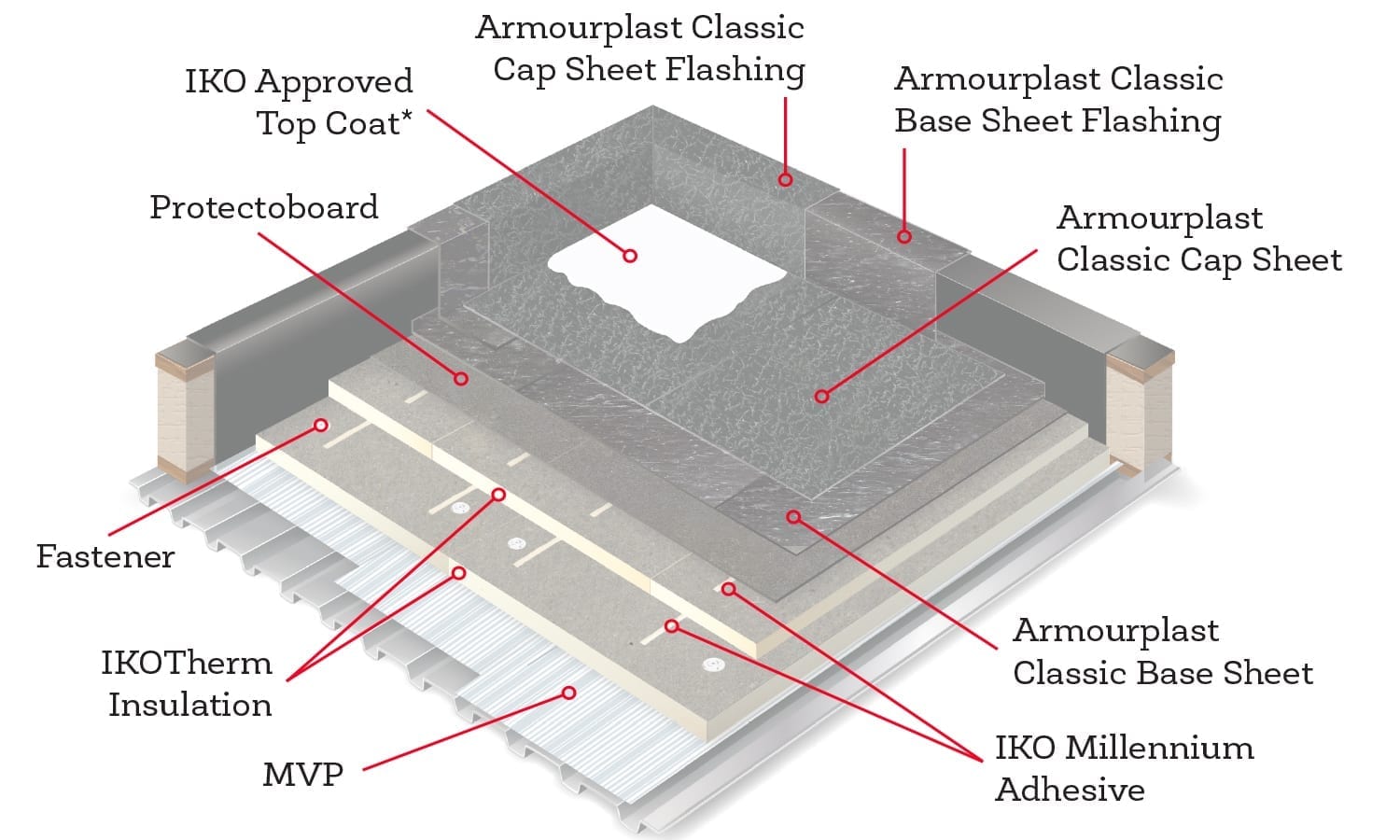 5 - Modified bitumen (or polymer modified bituminous materials)
This flat roofing material is popular because it uses trusted weatherproofing materials (asphalt) reinforced with polymers. It has the advantage of multiple layers but needs fewer layers than built up roofing and is less messy to apply.
Materials
- Waterproofing bitumen is strengthened with polymers (such as atactic polypropylene or styrene butadiene styrene) to add durability and is layered on top of sheets of fiberglass or polyester mats
Advantages
- Highly puncture- resistant and long lasting
- Affordable
- Comes in smaller-sized rolls than single-ply membranes, making it more manageable to install
Disadvantages
- More labor- intensive than single-ply membrane systems because it requires extra layers
How it’s applied
- Generally heated by a roofer’s torch to adhere to the roof and seal the seams; may also be applied with cold adhesive
- Newer types are available in “peel and stick” variety
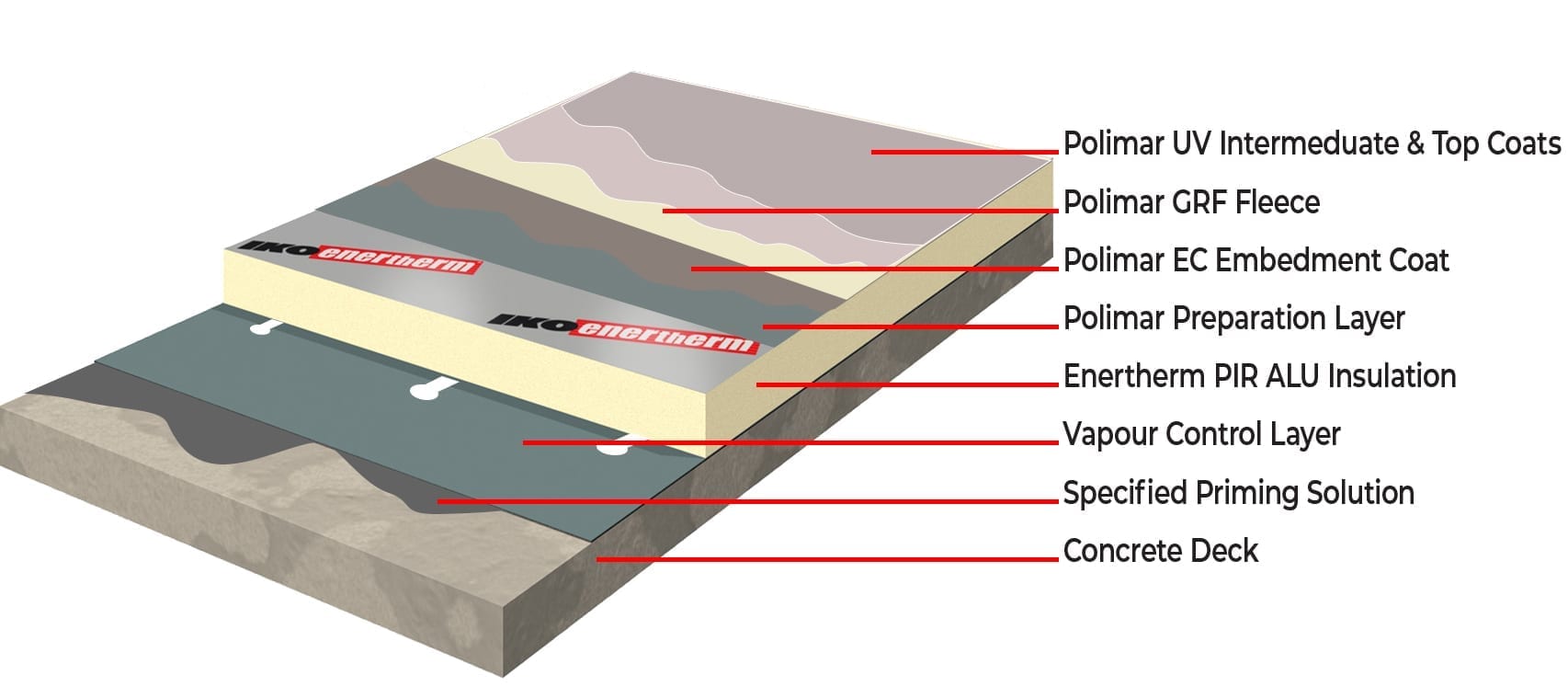 6 - Liquid applied roofing
Often called liquid roofing, this technology is gaining ground in North America as it becomes more familiar to the industry. Proponents like this product because it’s easy to apply and provides smooth, effective coverage.
Materials
- Waterproofing material made of bitumen and reinforced with glass fibers
Advantages
- Easy to apply, no heat required
- Liquid creates one monolithic, smooth and effective watertight membrane (no seam adhesion required)
- Highly resistant to sun’s UV rays and heat
- Dries rapidly
Disadvantages
- May require finding a specialized contractor experienced with its application
How it’s applied
- A first layer of liquid cold-poured on top of insulation, with a second layer applied on top of reinforcing asphalt or felt
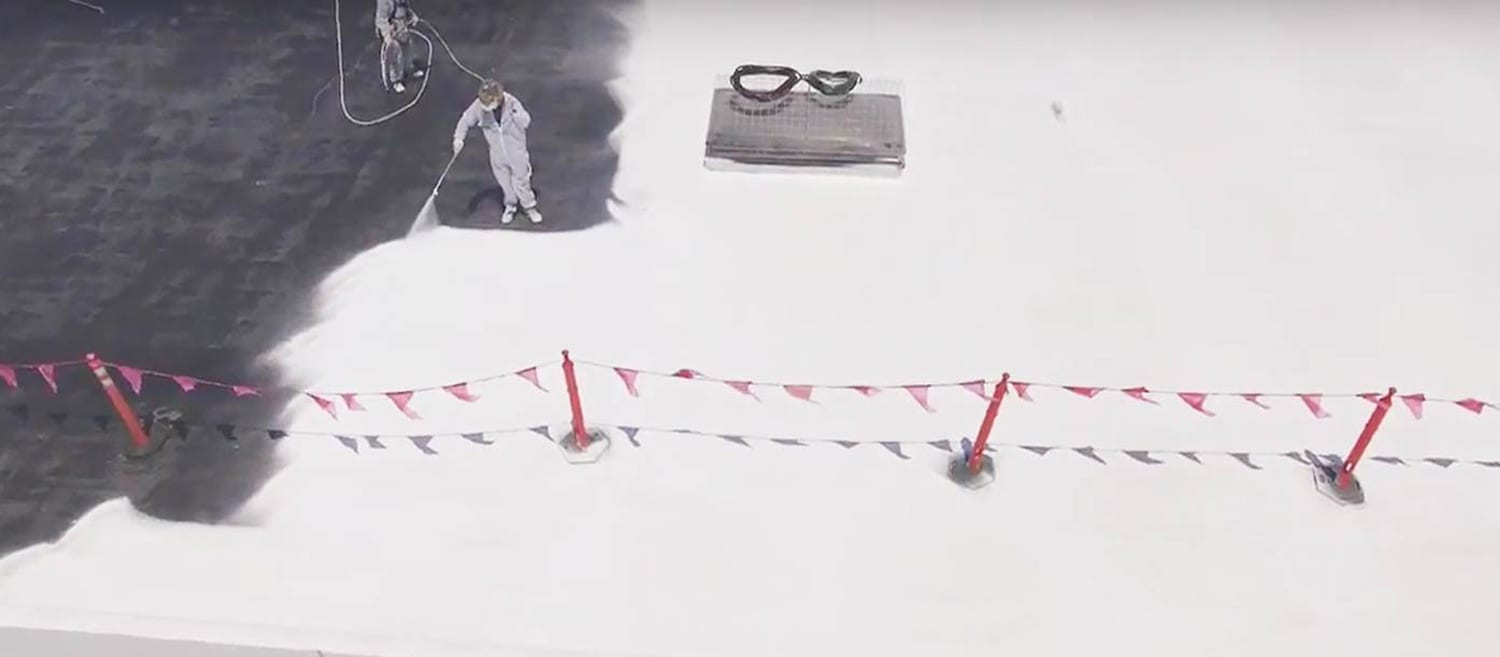 7 - Spray on roofing
Often called liquid roofing, this technology is gaining ground in North America as it becomes more familiar to the industry. Proponents like this product because it’s easy to apply and provides smooth, effective coverage.
Materials
- A sun-reflective protective coating made of silicone, acrylic or aluminum
Advantages
- Easy to apply
- Creates an effective weatherproof, fire-resistant and UV-reflective barrier
- Because it’s sprayed on, creates a seamless layer
Disadvantages
- Expensive
- May require searching for specialized contractor who is experienced with its application
How it’s applied
- Sprayed directly over insulation
8 - Metal roofing
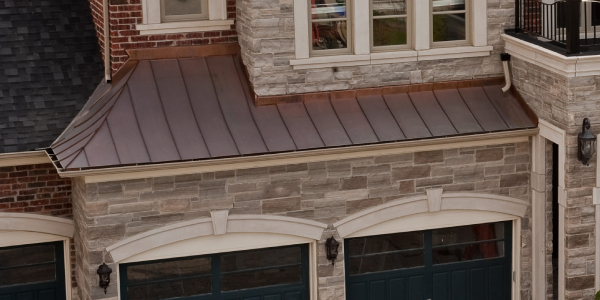
Metal is an expensive, but stylish option because it is straightforward, unique and non-chemical.
Materials
- Large panels of standing seam steel, aluminum, zinc or copper
Advantages
- Long-lasting
- Easy to install
- Acts as both waterproofing and sun/fire protection for the roof (no top layer required)
- Easy to maintain
- Made of recycled materials (which can again be recycled after use)
Disadvantages
- High cost of materials
- Can be noisy during a rain event.
- Hail can create a great deal of damage to the roof surface.
How it’s applied
- Installed over insulation
- Repaired using soldering (for aluminum, use fiberglass patches or aluminized caulking)
Can you have a flat roof with shingles?
Roofing experts discourage the use of shingles on a flat roof. As few points of sealing as possible will reduce potential for leakage. This is why most flat roofs use large squares or single sheets of materials. In some cases, a homeowner may choose an option such as a Self-Adhering Membrane Residential Roof System, which offers the multi-layer protection of a membrane roof, with the traditional granule look of a shingled or built-up roof. These offer lasting protection against snow, ice and elements – and hold up well to foot traffic on low-slope roofs. They’re peel-and-stick cold application, and availability in single, double or triple layer reinforcement make them a popular choice for roofs with at least 1:12 slope.
How to make a flat roof last
It is incumbent upon the owner of a flat roof to regularly inspect and maintain the roof. This will make a significant difference in maintaining its integrity and longevity. A basic inspection is suggested twice a year and after any major rainstorms. We recommend consulting a roofing professional who is fully versed in rooftop safety techniques and precautions.
Flat roof inspection checklist:
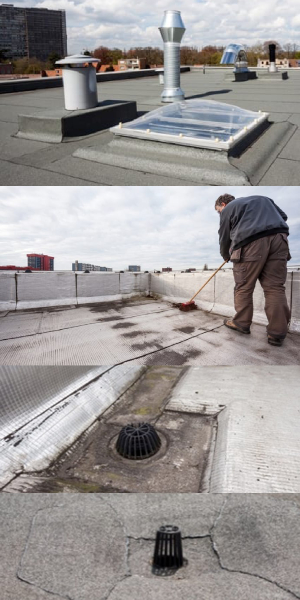 In normal circumstances, wait until 48 hours after a rainfall to clean and inspect the roof. Any water should have evaporated by this time. If it hasn’t, that’s a sign of a problem with roof drain parts or the drainage system.
- To help see where any water might be collecting, clean any debris from the flat roof surface, including sweeping or gathering fallen leaves or branches and clearing any loose debris or gravel that may block drainage holes.
- Inspect flashings around the chimney and skylights. If the flashing material is cracked or rusty, you will want to have it repaired as soon as possible.
- Inspect the integrity of the top layer of protection (often a gravel or chipped mineral mixture) to ensure it hasn’t dispersed and left a bald patch. This is key to protecting the membrane underneath while also providing sun and fire protection. On a built-up roof, when gravel becomes sparse, the asphalt layer underneath can dry and crack under the sun. This could lead to “alligatoring,” which may eventually cause the layer to leak and fail.
- Check for any damage, puncturing, rips or wrinkling of the membranes. This might be difficult to see if a layer of chipped material or gravel is on top. Regardless of your flat roof design, take time to thoroughly check the surface for flaws.
- Any damage should be repaired immediately to return watertight protection to the roof and prevent further deterioration.
- If the top layer of gravel needs to be replaced or replenished, consult a roofing professional for proper application over the surface of the roofing material.
Original article and photo source: IKO
Learn more about IKO in their Coffee Shop Directory or visit www.iko.com/na/.
Recommended For You

Understanding and Obtaining Energy Objectives in Building Assessments
Read More ...
Designing moisture out of controlled environments
Read More ...
MRCA heads to Cape Coral
Read More ...
UP TO THE MINUTE

Comments
Leave a Reply
Have an account? Login to leave a comment!
Sign In