

Capitalize on the fall season before winter arrives

By Marco Industries.
Fall often delivers the most consistent conditions for roofing, but success still depends on climate and material selection.
Roofing contractors rarely agree on the ideal time of year to schedule roof installations. Here at Marco Industries, we know that climate, material choice and regional weather patterns all play a role in determining when a roof project goes smoothly and when delays are likely. Asphalt shingles are still the most prevalent material used in residential projects, but metal, tile and low-slope membrane systems are growing in popularity and respond differently to weather shifts. This makes timing all the more essential to deliver a job well done. Many in the industry say the fall season strikes the best balance of mild temperatures and predictable weather for most materials.
Spring often kicks off the roofing season as warmer temperatures begin to take hold. For shingle roofs, this means materials can start sealing properly, and homeowners are ready to fix issues caused by winter storms. Spring is also a good time for installing metal roofs, as moderate temperatures make it easier to handle panels and avoid expansion-related complications. However, spring is also known for unpredictable weather — frequent rain delays, slick surfaces and wind gusts can interrupt even well-planned projects. Wet conditions also complicate installations for tile and membrane systems, which require dry surfaces to ensure adhesion and performance.
Summer, especially early summer, offers reliable weather and longer daylight hours, which can help projects move faster. This is typically when shingle and metal roofing projects hit their peak. Asphalt shingles adhere well in warm temperatures, and metal roofing installations benefit from consistent conditions that limit thermal movement during installation. That said, the peak summer heat can introduce new challenges. Asphalt shingles can become too soft, making nailing less precise, and high temperatures can cause metal panels to expand, complicating fastening. For crews, working in extreme heat creates safety concerns and reduces efficiency. Tile roofing can also be tricky in the summer, as some underlayment materials become more difficult to handle when hot.
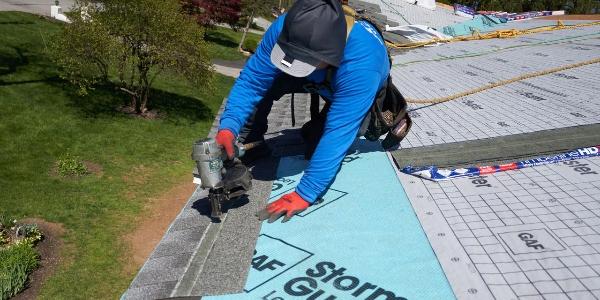
Fall consistently emerges as the most favorable season for a wide range of roofing materials. The moderate temperatures are ideal for asphalt shingles, allowing proper sealing before winter. Metal roofing installations benefit from reduced thermal expansion, making panel alignment and fastening more accurate. Membrane systems for low-slope areas or additions can also be installed more easily in dry, mild conditions. Homeowners are especially motivated in the fall, eager to get their roofs in shape before the cold sets in. The only downside is the compressed timeline — shorter days and increased demand mean crews must work efficiently to complete projects before winter arrives.
Winter is the slowest and most limited season for roofing. For shingle roofs, cold temperatures prevent sealing, and brittle shingles are more likely to crack during handling. Snow, ice and freezing rain create dangerous conditions for crews and make it hard to maintain jobsite cleanliness. However, winter isn’t off-limits for all materials. Metal roofing can still be installed in winter, as long as proper precautions are taken with thermal movement and panel storage. Membrane systems like TPO or EPDM can also be installed during winter if adhesives are stored properly, and temperatures meet manufacturer minimums. Still, winter work requires significant planning and typically focuses on emergency repairs or time-sensitive builds.
So, what’s the best season for roofing? While the answer depends on your climate, workload and materials, fall generally provides the best combination of temperature, weather stability and homeowner readiness. The key for contractors is to understand how each material interacts with weather conditions and to adapt scheduling, crew training and communication accordingly. A well-timed roof installation not only boosts performance — it also cuts down on callbacks and keeps your customers happy.
Of course, you work when there’s work. And we do, too. So, call us whatever the season for the best ventilation and accessories for roofs available today. Visit www.MarcoIndustries.com to learn more or contact us directly via email or by calling 1-800-800-8590.
Original article source: Marco Industries
Learn more about MARCO Industries in their Coffee Shop Directory or visit www.marcoindustries.com.
Recommended For You
Help homeowners weather the storm
Read More ...
Has Your Roof Weathered the Storm?
Read More ...
Some Striking Facts About Lightning
Read More ...
UP TO THE MINUTE




Comments
Leave a Reply
Have an account? Login to leave a comment!
Sign In