UP TO THE MINUTE






From skylines to sidewalks, concrete is heating up
By Emma Peterson.
Understanding the urban heat island effect and how cool pavements can save lives.
When we think of over-exposure to the elements and injuries related to weather conditions, we often think of the risks of freezing. But just because we are out of the cold most of the year in the Northern Hemisphere doesn’t mean exposure risks go away – they just shift. In 2025 the Yale School of Public Health found that, “while cold weather continues to be a leading contributor to U.S. deaths annually, deaths linked to heat exposure surged more than 50% over the past two decades.” What does this surge look like in numbers? Where heat-related deaths were around 2,670 annually from 2000-2009, they surpassed an annual count of 4,000 between 2010 and 2020.
The numbers have risen to this staggering height for a variety of reasons, including climate change. However, one that is often overlooked is beneath our feet – concrete. A 2014 TIME article reported that “When temperatures rise, the countless miles of concrete streets, sidewalks, walls and roofs in cities magnify that effect, creating a phenomenon known as urban heat islands (UHI). When combined with the heat released by vehicle engines, paved areas can boost the temperature in cities by as much as 22°F.”
So, what can we do about this urban heat island effect? The Cool Roof Rating Council (CRRC) recommends incorporating cool roofs, walls and surfaces into our urban spaces. They explain on their website, “Cool roofs and walls have an important role in combating UHIs. Due to their ability to reflect heat back into the atmosphere, installing reflective materials on buildings [and other surfaces] decreases the building’s surface temperature, as well as temperatures inside the building.”
And it is this principle of cool surfaces that the Smart Surfaces Coalition (SSC) is putting into action. Iona Isachsen, a project manager at SSC and a member of CRRC, explains how they do this:
To support cities’ exploration of cool pavement solutions, SSC convenes the Cool Roadways Partnership (CRP): A national peer-learning network of researchers, nonprofits and over 60 cities and counties working to advance cool pavement as an urban heat mitigation strategy. The CRP offers a forum to compare technology options, share implementation challenges and discuss strategies to encourage the development and deployment of high-performing products.
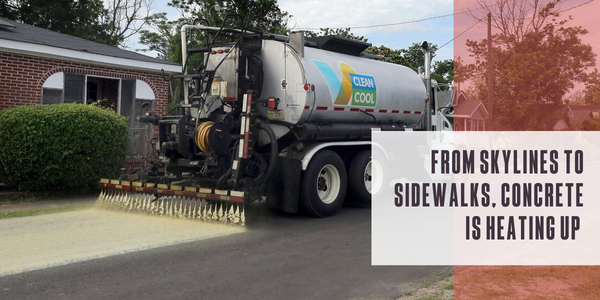
As a result of these forums and partnerships, SSC has helped jurisdictions across the United States adopt an array of cool pavement technologies. For example, in Charleston County, Texas, the public works department installed photocatalytic asphalt in 2021 as a part of pavement maintenance. Iona shared the results of this choice, “The treatment uses titanium dioxide nanoparticles that react with sunlight to break down pollutants. Through a research partnership with Texas A&M Transportation Institute, evaluation testing confirmed notable reductions in nitrogen oxides and microplastics pollutants.”
To see more examples of cool pavement and learn more about its benefits, check out SSC’s recently published Cool Pavement Primer.
Image credit: Charleston County Government
Learn more about Cool Roof Rating Council (CRRC) in their Coffee Shop Directory or visit www.coolroofs.org.
About the author

Emma is the senior content developer at The Coffee Shops and AskARoofer™. When she's not working or overthinking everything a little bit, she enjoys watching movies with friends, attending concerts and trying to cook new recipes.
Recommended For You
The hidden key to sustainable roofing
Read More ...
The Green Roof Revolution – A Growing Sector for BUR
Read More ...
Beyond surface-level asphalt softening
Read More ...
UP TO THE MINUTE
Comments
Leave a Reply
Have an account? Login to leave a comment!
Sign In