UP TO THE MINUTE






How AI is being used in roofing
By Emma Peterson.
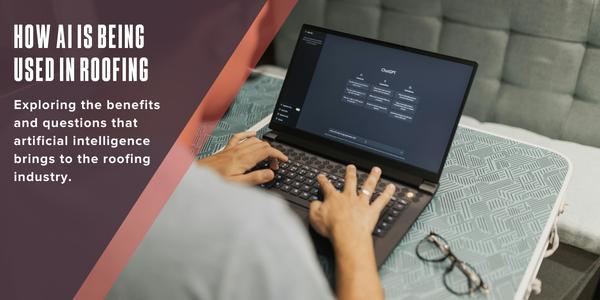
Exploring the benefits and questions for roofers that artificial intelligence brings to the roofing industry.
AI has been the topic of many conversations this year. From its predictive data capabilities to marketing applications, it holds a lot of power. To dive into what AI is and how it can be used in a productive way, Karen Edwards spoke to Jon Gardner of Owens Corning and Trent Cotney of Adams and Reese in a new Read Listen Watch® (RLW) webinar.
Jon, who leads Owens Corning’s contractor learning and development program, opened the conversation by explaining the basics of what AI is, sharing, “At the end of the day, AI is a software. It learns from patterns, and so the more information that you feed AI, the more it's going to be able to learn and generate the type of information. In the roofing industry, what we've been seeing is AI using predictions to automate tasks.”
In other words, contractors are able to give AI information on historical jobs, such as photos and measurements, and then it is able to help them make decisions about upcoming projects. Trent, who is a partner at Adams and Reese, along with serving as general counsel to leading roofing organizations like NRCA, explained, “AI can enhance what you're doing. It can help you spot issues; it can give you ideas, it can brainstorm with you, automate your office tasks and more. It's really an efficiency tool.”
Additionally, AI has been incorporated into building products to create “smart materials.” Trent explained, “We're seeing huge advancements within roofing where products use AI to offer enhanced features that provide notifications, early warnings and/or data on how a material is performing on a roof.” While having these insights can be a powerful asset, there are also questions that come with it. Mainly, who is liable and responsible for the data coming from a smart material or the AI software within it? Trent explained, “If you are collating that data that was embedded in these ‘smart materials’ that allow you to monitor existing conditions, who actually owns that data? If you as a contractor are recording it and want to publish data down the road, is it really your data to share?” Trent’s advice is to be proactive and to make it clear in your contracts who is liable and responsible for the data coming from installed “smart materials” and other AI software.
At the end of the day, AI is a powerful tool with the capacity to do a lot of good. But that must be balanced with a proactive and aware mindset. As Jon put it, “Every aspect of the business is being impacted by AI. The idea here is figuring out which areas that you can plug AI in to be the most impactful and helpful for yours.”
Listen to the episode or Watch the recording to learn more about how AI is impacting the roofing industry.
Learn more about Owens Corning in their Coffee Shop Directory or visit www.owenscorning.com/roofing.
Recommended For You

CRCA leaders highlight connection at national conference
Read More ...
Shaping the next generation of roofers
Read More ...
Choosing the right safety systems for your business
Read More ...
UP TO THE MINUTE
Comments
Leave a Reply
Have an account? Login to leave a comment!
Sign In