

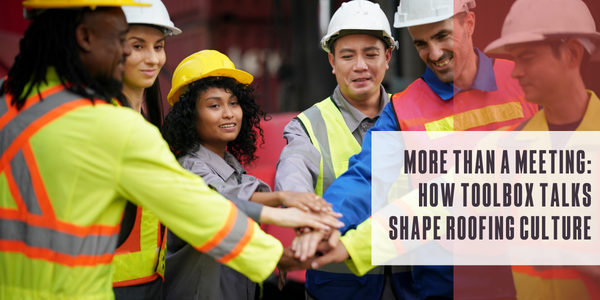
More than a meeting
By Cotney Consulting Group.
How toolbox talks shape roofing culture.
If you want to know your company's safety culture, listen to a toolbox talk. This is not the scripted version, where everyone nods politely while thinking about the day ahead, but the honest ones, where supervisors lead by example, crews participate and honest conversations happen.
In roofing, where the work changes daily and conditions can shift by the hour, toolbox talks are more than a compliance requirement. They’re a culture check. Done right, they connect leadership and field crews, reinforce expectations and turn safety from a rule into a routine.
The power of a five-minute conversation
Roofers deal with daily hazards: heights, weather, materials, equipment and fatigue. No amount of paperwork or policy can replace the impact of a five-minute conversation that grounds a crew in the risks they’ll face that morning.
Toolbox talks aren’t about filling time or satisfying OSHA’s documentation trail. They’re about preparing people to make better decisions when it matters. A strong talk reminds everyone why safety matters, what’s changed on the site and the priorities before anyone picks up a tool.
It’s a leadership moment, and the best leaders treat it that way.
The difference between talking and connecting
Every safety professional has seen it happen: someone reads a generic safety sheet word-for-word, the crew stares at the ground and no one remembers a thing afterward. That’s not communication, that’s box-checking.
The best toolbox talks sound different. They’re conversational, relevant and built around shared experience. A good supervisor doesn’t just tell roofers what to do; they tell them why it matters. They ask questions like, “What hazards do you see today?” or “What part of this job feels riskier than usual?” Those simple questions open dialogue, build awareness and turn the talk into teamwork.
When workers contribute, they buy in. And when they buy in, safety becomes part of their thinking, not just what they’re told.
Make it real, not recycled
Crews can tell when a toolbox talk is recycled. Engagement drops fast if they’ve heard the same heat stress speech three times a month. Instead of repeating scripts, rotate topics and connect them to what’s happening on-site.
For example:
- If you’re tearing off a roof near power lines, discuss electrical hazards and safe clearances.
- If you’re using new adhesive products, review chemical safety and PPE.
- If you’re working under time pressure, focus on planning and pacing instead of shortcuts.
Relevance builds credibility. A few well-prepared minutes before work saves hours of downtime, rework or injury later.
Train your trainers
Not everyone is naturally comfortable speaking in front of a crew. Supervisors need support and practice to deliver practical toolbox talks.
Invest a little time in training your supervisors to communicate clearly and confidently. Provide outlines or talking points, not scripts. Encourage them to share personal stories — a near miss, a lesson learned or a close call from experience. Real examples make safety relatable and show that everyone, even the boss, is learning.
Field leadership training should cover more than production and scheduling; it should also include communication. The most successful roofing companies understand that foremen are more than crew leaders; they’re culture carriers.
Keep it consistent
Toolbox talks only work when they’re consistent. Sporadic communication sends the wrong message that safety is optional. Whether your crews meet daily or weekly, make sure talks happen on schedule, every time.
Consistency builds trust. When workers know they’ll get regular updates, reminders and expectations, they stop tuning out and start anticipating the discussion. Over time, that predictability shapes habits, which are the foundation of culture.
Encourage two-way feedback
An excellent toolbox talk isn’t one-sided. Encourage questions, feedback and honest discussion. If someone points out a hazard or improvement idea, act on it. Ignoring feedback is the fastest way to destroy credibility.
When workers see their suggestions lead to change, such as a better staging area, improved signage or safer ladder placement, they understand their voice matters. That’swhen safety becomes shared ownership rather than management oversight.
The best supervisors don’t dominate the talk; they guide it.
Document without losing focus
Documentation is still necessary; it protects the company and proves compliance, but don’t let it overshadow the purpose. Keep sign-in sheets quick and straightforward. Focus on quality, not paperwork.
A meaningful five-minute conversation backed by a one-page form is far more valuable than a half-hour lecture that nobody remembers. When you treat documentation as proof of engagement, not bureaucracy, your team sees safety as genuine, not forced.
Evolve with your workforce
Today’s roofing crews include a mix of generations, languages and experience levels. What connects with one group may miss the mark with another. Adapt your delivery to use visuals, demonstrations or bilingual materials when needed.
Some topics work best hands-on: fall arrest checks, equipment inspections or ladder setup demonstrations. Others benefit from group input, like discussing near-misses or planning for weather changes. The goal isn’t to impress; it’s to communicate effectively with the people in front of you.
From habit to culture
The best roofing companies don’t see toolbox talks as isolated events; they see them as daily culture-building tools. Every conversation reinforces your standards, valuesand respect for the people doing the work.
When safety communication becomes a habit, it builds trust. When that trust becomes consistent, it creates culture.
Toolbox talks are where that happens, one conversation, one morning, one crew at a time.
Learn more about Cotney Consulting Group in their Coffee Shop Directory or visit www.cotneyconsulting.com.
Recommended For You

Preventing Heat-Related Illness and Injury
Read More ...
Social Distancing on the Roof
Read More ...
NRCA and 1Life Software partner to launch the Safety Excellence Program
Read More ...
UP TO THE MINUTE




Comments
Leave a Reply
Have an account? Login to leave a comment!
Sign In