UP TO THE MINUTE





New roles roofing hasn’t planned for: Managing people, data and machines together
By Cotney Consulting Group.
These new roles won't eliminate existing jobs. They build on them.
Throughout this series, we have focused on readiness, operational discipline, realistic entry points for automation, workforce integration and the systems that will either support or undermine future technology adoption. All of those elements converge on one unavoidable reality: as automation increases, roofing organizations will need new roles and expanded responsibilities.
Not because robots replace people, but because they do not manage themselves.
The mistake many industries make when adopting new technology is assuming existing roles will absorb new responsibilities without adjustment. In roofing, that assumption has already strained supervisors, managers and operations teams. Humanoid robotics and advanced automation will amplify that strain unless roles evolve intentionally.
Why new roles emerge before full automation
Automation does not arrive fully formed. It comes in pieces first as tools, then as systems and eventually as integrated workflows. Each step adds complexity. There is more data to interpret, more assets to manage, more safety exposure and more coordination required between people and technology.
Early on, those responsibilities are usually absorbed informally across existing staff. Over time, that approach becomes unsustainable. The work still gets done, but accountability blurs and performance suffers.
This is where new roles begin to take shape, not as replacements, but as stabilizers.
The evolution of supervision
One of the first shifts will occur at the supervisory level. Foremen and superintendents will still be responsible for people, quality and productivity. What changes is the scope of oversight. As robotic assistance enters workflows, supervisors must monitor task boundaries between people and machines, safety in shared work zones, workflow sequencing and how exceptions are handled when conditions change. This does not require supervisors to become technologists. It requires them to operate with greater clarity, structure, and situational awareness.
In many companies, this will feel less like a new role and more like an expanded one. But without proper training and support, it becomes a point of failure.
The rise of the robotics operations role
As automation moves beyond isolated pilots, responsibility has to be consolidated. Whether the role carries a formal title or not, someone must be accountable for robotic asset deployment, maintenance coordination, performance tracking, workflow integration and communication between operations, safety and leadership.
Without clear ownership, automation stalls not because the technology fails, but because no one is empowered to manage it end-to-end.
In some companies, this role may sit within operations. In others, it may emerge from safety, equipment management or technology functions. What matters is not the title, but the clarity of ownership. Without it, robotics initiatives often stall, not because the technology fails, but because no one is empowered to manage it end-to-end.
Safety leadership in a shared environment
Safety roles will also evolve. Traditional safety management focuses on human behavior, equipment condition and environmental hazards. Automation introduces a new variable: interaction.
Human–machine interaction requires defined protocols, apparent authority to stop work, planned incident response and documentation that accounts for both human and mechanical factors. This does not replace existing safety leadership. It expands it.
Organizations that already take safety governance seriously will adapt more easily. Those who rely heavily on informal practices will face greater risk as automation increases.
Data-aware operations support
Another role many roofing companies are unprepared for is data interpretation. Automation generates information on information usage, performance metrics, downtime records and workflow feedback. Without someone responsible for translating that information into operational decisions, its value is lost. This does not mean every company needs a data scientist. It means someone has to understand what data actually matter, identify trends, support decision-making and provide clear feedback to supervisors and leadership.
When no one owns that responsibility, data exists, but insight doesn’t. In many cases, this responsibility will grow out of existing operations or estimating roles. But it cannot remain accidental.
Why these roles are evolutions, not replacements
A critical point in this discussion is that none of these roles eliminates existing jobs. They build on them. Supervisors become more strategic. Safety leaders gain broader influence. Operations staff gain visibility and impact. Career paths expand rather than contract.
Handled correctly, this evolution improves retention and professionalism. Handled poorly, it creates confusion and resistance. The difference lies in planning.
Preparing for role evolution now
Roofing companies do not need to formalize these roles today. But they do need to recognize where responsibility is already stretching. Leaders should be asking who owns automation-related decisions, who maintains accountability when systems overlap, who supports supervisors as workflows become more complex, and who ensures safety governance keeps pace with change.
If those answers are unclear, that’s the signal not that robots are coming tomorrow, but that role clarity needs attention now.
What this series will conclude with
In the final article of this series, we will bring these themes together into a practical readiness framework. The focus will be on what roofing contractors can do over the next several years to strengthen operations, leadership andculture, regardless of how quickly automation advances.
The goal is not prediction. It is preparation.
Learn more about Cotney Consulting Group in their Coffee Shop Directory or visit www.cotneyconsulting.com.
Recommended For You

Building stronger businesses through cleaner financials
Read More ...
The human factor: Integrating humanoid robotics into a skilled roofing workforce
Read More ...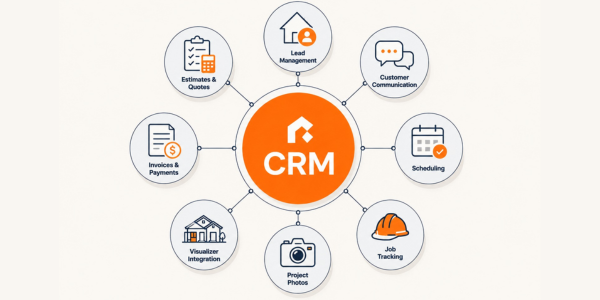
Choosing the right CRM for your business
Read More ...
UP TO THE MINUTE
Comments
Leave a Reply
Have an account? Login to leave a comment!
Sign In