UP TO THE MINUTE






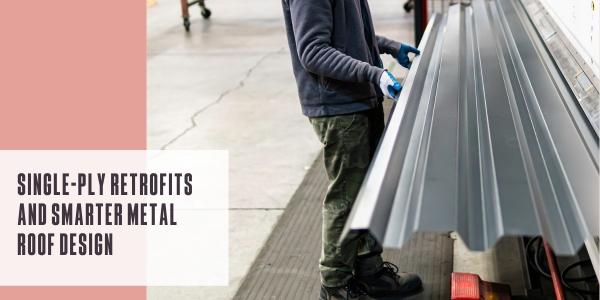
Single-ply retrofits and smarter metal roof design
By Jesse Sanchez.
Industry engineers say single-ply systems perform best when contractors understand water flow and structural loading impacts.
The growing use of single-ply membranes to re-cover existing metal roofs has become common across the industry and companies such as Roof Hugger, alongside Force Engineering and Testing Inc., have spent years studying why the approach can introduce hidden structural risk. Fast installation, warranty options and relatively low upfront cost have made single-ply systems attractive, but engineers say the method changes how metal buildings manage water and heavy loads in ways they were never designed to handle.
According to research published in RCI Interface, pre-engineered metal buildings rely on purlins that are designed for balanced loading across each bay. When a ribbed metal roof is in place, water flows between panel ribs and drains evenly, keeping loads confined. A single-ply membrane removes those channels. Water instead migrates toward mid-span deflection points, concentrating weight where purlins are already designed to flex. Over time, that concentration can worsen existing dips or create new ones, pulling water from adjacent bays and compounding stress across the structure.
There are several scenarios where that redistribution becomes dangerous, including overloaded or damaged purlins, dips near the eave strut and sudden lateral water movement caused by billowing under wind loads. In one documented case involving an internally drained standing seam roof, localized ponding escalated rapidly as water was drawn into a single bay. As one purlin deflects, adjacent bays can rise, diverting even more water into the weakened area until collapse occurs.
Testing conducted by engineers illustrates how narrow the margin can be. In a base test using typical low-slope metal building components, purlins buckled at 23.9 pounds per square foot. One inch of water weighs 5.2 pounds per square foot, meaning failure occurred with roughly 4.6 inches of accumulated water. The findings make it easy to see how altered drainage paths can push systems beyond their limits during heavy storms.
It is important to note that re-covering metal roofs is not inherently flawed. There are many valid reasons to re-cover an existing metal building roof that is not performing optimally, but the experts stress that success depends on eliminating the underlying causes of failure rather than covering them over. Their conclusion is clear that the most effective way to recover an existing metal roof on a metal building is to install another metal roof.
For contractors, the takeaway is not to abandon retrofits but to understand how system choice interacts with structure. Symmetrical standing seam metal-over-metal systems, the authors argue, maintain balanced loading, improve wind performance and allow future repairs without compromising the building’s original design intent.
Learn more about Roof Hugger in their Coffee Shop Directory or visit www.roofhugger.com.
About the author

Jesse is a writer for The Coffee Shops. When he is not writing and learning about the roofing industry, he can be found powerlifting, playing saxophone or reading a good book.
Recommended For You
Making TapcoSlate® easy to install
Read More ...
Top 3 Reasons Why PVF Film Makes a Great Alternative to Coil Coatings
Read More ...
Protect your business and your client’s property
Read More ...
UP TO THE MINUTE

Comments
Leave a Reply
Have an account? Login to leave a comment!
Sign In