UP TO THE MINUTE






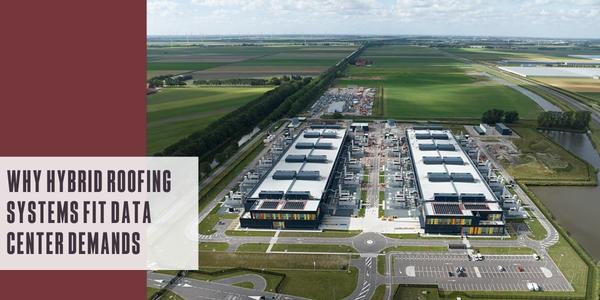
Why hybrid roofing systems fit data center demands
By GAF.
Hybrid roof assemblies combine durability, redundancy and energy efficiency to help protect data centers and support uninterrupted operations.
Data centers depend on carefully controlled environments to keep servers, storage devices, networking equipment and other critical technology operating reliably. Because roofing failures can threaten interior conditions and disrupt essential digital services, GAF hybrid roofing systems offer data center owners a layered approach that combines the proven strength of modified bitumen with the flexibility, weather resistance and energy efficiency of single-ply membranes.
Unique data center needs
Data centers are classified by tiers ranging from I to IV, a ranking system that indicates the reliability of the data center's infrastructure. The most basic tier I facility doesn't guarantee redundancy for any system and it's allowed to go "offline" up to 26 hours per year. A tier IV data center, however, is fully redundant and "fault tolerant," meaning it's only allowed to go offline for a total of 26 minutes per year.
A data center's roof construction is therefore critical to help not only protect the building's interior but also maintain the ambient temperature range required for the sensitive equipment therein. Of all the possible reasons a data center might need to go offline, you don't want roofing problems to be one of them. When it comes to meeting these exacting requirements, hybrid systems can check all the boxes.
Understanding hybrid systems: What is a hybrid roof assembly?
A hybrid roof is composed of two roofing membrane systems, each with different materials and technologies, combined in a single roof assembly. Each system offers specific strengths and together, the hybrid system combines the best features of both.
One example of a hybrid roof assembly is a modified bitumen base with a cap layer consisting of a single-ply membrane. For a better understanding of how two roofing systems can be better than one, let's examine each system's strengths.
Modified bitumen systems
The traditional roof system for low-slope roofs is the asphaltic built-up roof (BUR). When first conceived in the 1890s, a typical BUR was composed of multiple redundant layers of rags, paper, or asbestos hot-mopped with asphalt. Over time, the plies evolved into "modified" bitumen membranes consisting of asphalt-impregnated fiberglass felts, fabrics, or mats with added flexibility from rubber or plastic modifiers. The final layer of a BUR is usually either an asphalt flood coating with embedded gravel or a mineral-surfaced, granulated cap sheet.
Depending on the chemical makeup of the base and cap layers, today's plies can be hot mopped, torch applied, cold applied or self-adhered. Multiple redundant layers of modified bitumen technology account for its longevity and robust puncture resistance. GAF bituminous roofing membranes, including RUBEROID®, GAFGLAS® and Tri-Ply®, have a long track record of proven performance and time-tested durability.
Single-ply roofing membranes
Single-ply membranes are the roofing system of choice for most commercial roofs due to their ease of installation and relatively low cost. Most single-ply membranes are either thermoplastic polyolefin (TPO) or polyvinyl chloride (PVC).
Each offers excellent performance, with strong, heat-welded seams, long-term weathering and UV resistance. GAF EverGuard® TPO membranes have the added benefit of natural fungal resistance and a high degree of flexibility, while GAF EverGuard® PVC membranes offer enhanced protection against fire and chemicals.
You can install these single-ply membranes more quickly than a traditional modified bitumen system using mechanical attachment, induction welding, or adhesives. They're also resistant to ponding water and are easy to repair and maintain. Single-ply membranes' higher Solar Reflective Index adds to a roof's energy efficiency, as well, which can help reduce cooling costs in the building.
Benefits of hybrid systems
When you combine the proven strength, redundancy and puncture resistance of modified bitumen assemblies with the flexibility, ease of installation and energy efficiency of single-ply roofing membranes, it adds up to a roofing system that's hard to beat.
The benefits of combining these two roof technologies include:
- Improved durability and longevity
- Enhanced energy efficiency
- Cost effectiveness over the system's life cycle
- Flexibility in design and application
Meeting unique data center challenges
With their multi-layer redundancy, strong protection against leaks and enhanced energy efficiency, hybrid systems can meet data center roof construction's demanding requirements.
A GAF hybrid roofing system can also be an excellent solution for a data center roof retrofit or re-cover. If the existing BUR is in relatively good condition with minimal underlying moisture, you can install a single-ply fleece-back TPO membrane as a new top layer without tearing off the existing roofing system, which can be disruptive and expensive. This addition can increase the entire roof assembly's service life through its long-term weathering protection and UV resistance. Additionally, you can install the single-ply membrane with low-VOC options, minimizing both odor and noise disturbance.
Whether for a new building or a retrofit, GAF hybrid roof systems offer multiple long-term benefits for data centers. For more information, explore the GAF Data Center page.
Original article source: GAF
Learn more about GAF in their Coffee Shops Directory or visit www.GAF.com.
Recommended For You
All Points is Offering Quantity Discounts!
Read More ...
Mission control systems strengthen roofing operations beyond CRM
Read More ...
Connecting jobsite photos to business workflows
Read More ...
UP TO THE MINUTE
Comments
Leave a Reply
Have an account? Login to leave a comment!
Sign In