

Winter roof loads: What every roofer should know about snow, ice and safety
By DaVinci Roofscapes.
How to protect roofs — and homeowners — when winter weather hits.
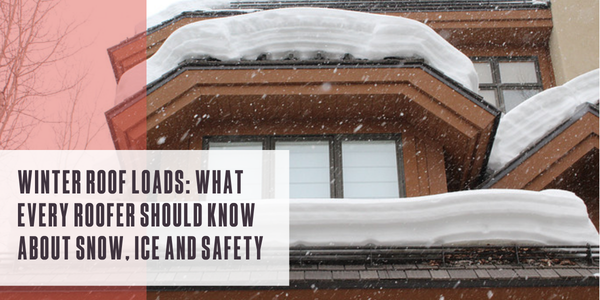
Soft, white and beautiful — A fresh snowfall transforms any landscape into a winter wonderland. But for roofers, snow brings significant challenges. Beneath that picturesque layer, every flake adds more weight to a roof and if you’re not prepared, the consequences can be severe. Have you ever paused to consider just how heavy snow and ice really are? More importantly, how much weight can the roofs you work on actually support?
We’ve all seen dramatic images of people shoveling mountains of snow off roofs during blizzards. But here’s something many homeowners and even some contractors might not realize: just one to two feet of heavy, wet snow blanketing a roof can weigh several tons. If that weight isn’t properly managed, it can mean major trouble for the structure.
March is National Snow Guard Safety month
March brings more than just the promise of spring — it’s also National Snow Guard Safety Month, sponsored by Rocky Mountain Snow Guards. This dedicated month is the perfect opportunity for roofing professionals to refocus on roof safety, especially when it comes to snow retention. It’s a critical reminder to revisit the best practices for ensuring snow and ice remain where they belong, particularly on composite shake and slate roofs, which can be more prone to dangerous snow slides.
Understanding roof load capacity
Every well-engineered roof starts with a careful design process. Architects and structural engineers factor in the anticipated weight of snow and ice, ensuring the roof will pass local building codes. These codes are reviewed and enforced by community building officials, aiming to keep everyone safe throughout the winter.
The American Society of Civil Engineers (ASCE) sets the national standards for these calculations. Their ASCE/SEI 7 Standard, “Minimum Design Loads and Associated Criteria for Buildings and Other Structures,” defines how to determine design loads — including snow, ice and much more — for all types of buildings. Updated every six years, this standard is the foundation for safe, code-compliant roofs.
When designing for cold climates, roofing professionals consult the “Snow Loads: Guide to the Snow Load Provisions of ASCE 7.” This guide offers clear, authoritative details on how much weight a roof should hold, depending on its location, slope and materials.
How much weight can a roof really hold?
So, what’s the magic number? For a properly engineered, up-to-code home, the roof should be able to support the full ground snow load designated for its region, measured in pounds per square foot (psf). For example, consider a new roof measuring 20 feet at the eave with 20-foot rafters and a 10:12 pitch, in an area with a ground snow load of 30 psf. That roof could be designed to bear as much as 12,000 pounds (6 tons) of snow and ice — plus the weight of its roofing materials. That’s a massive burden!
Material matters: Why roofing type is important
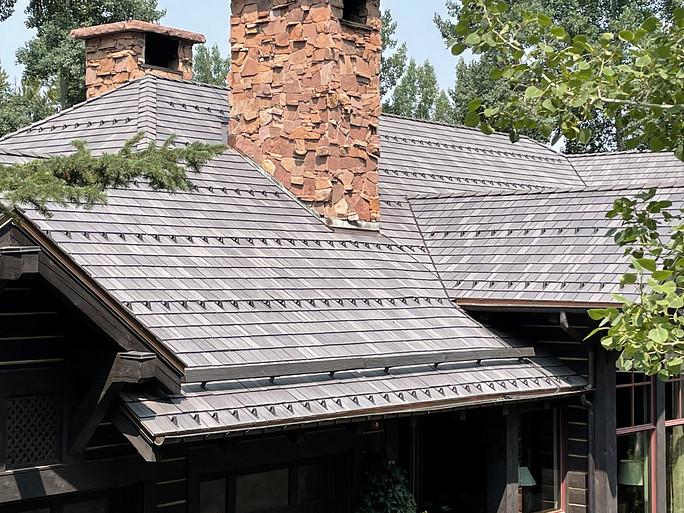
Not all roofs handle snow and ice the same way. “Frictionless” or smooth-surfaced roofs, such as those made from composite slate or shake, pose special concerns. While these tough, nonporous materials — like the products from DaVinci Roofscapes — resist water absorption and are highly durable, they also make it harder for snow and ice to “grip” the surface. Unlike asphalt shingles with textured granules, composite roofs can let snow and ice slide off in one dramatic avalanche.
Here’s why: as snow and ice melt, water seeps to the bottom of the snow layer, essentially lubricating the roof. When the conditions are right, that entire mass can slide off at once — no shoveling required. The danger isn’t about the roof’s structural support, but what happens below when several tons of snow and ice come crashing down.
 Composite roofs need snow retention systems
Here’s the bottom line. When it comes to composite roofing, the main danger isn’t the roof collapsing under the weight of ice and snow — it’s what happens when that accumulated snow and ice lets loose and avalanches off in sheets. Such slides can cause serious harm to people, pets, landscaping or property below.
To avoid this risk, every composite roof should be equipped with a snow retention system. Whether you’re installing a new roof or retrofitting an existing one, adding these systems is essential for safety. Snow retention can be seamlessly integrated during roof installation, but effective solutions are also available for roofs that have already been built.
The dangers of snow avalanches — And how to prevent them
Imagine a roof that’s 20 feet from the eave to the ground. In the right conditions, a snow avalanche could hurl ice and snow up to 15 feet from the house. That’s enough to seriously injure people and pets, or destroy landscaping and property below the eaves.
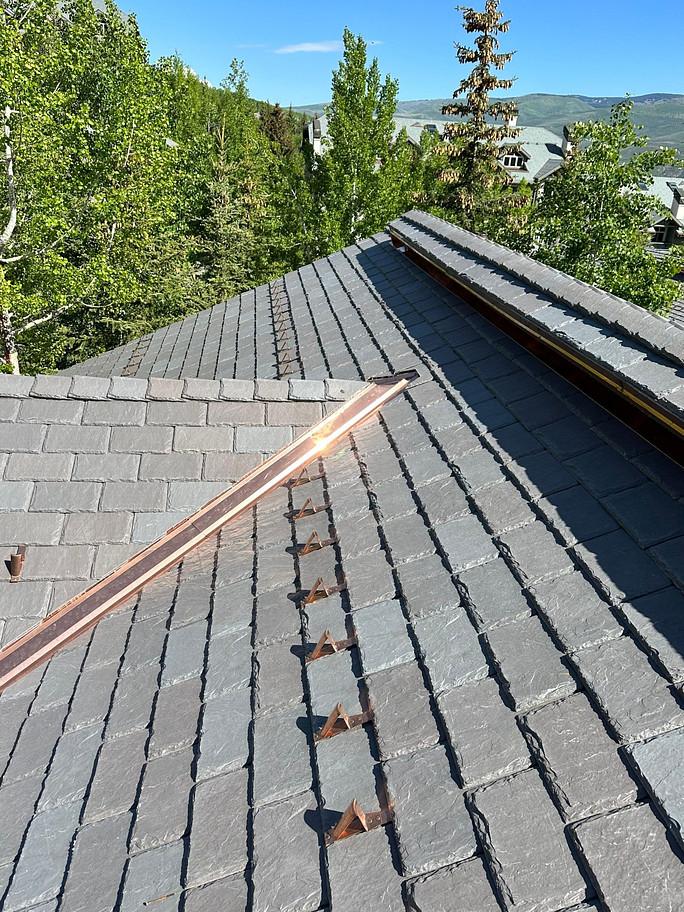
To mitigate these risks, snow retention systems are a must for composite and other smooth-surfaced roofs in snowy climates. There are two main types:
- Pad-style snow guards: These break up sliding snow and ice, ensuring it comes off in smaller, less dangerous pieces.
- Pipe-style snow guards: These act as a barricade, holding back snow and ice so it melts slowly, dropping down as small chunks or simply as water.
Using the right snow retention system protects both people and property from the unpredictable dangers of falling snow.
Choosing the right snow retention system
Designing an effective snow retention system starts with understanding the local ground snow load. The manufacturer must ensure that their system can withstand the force of snow and ice pushing against it.
Brian Stearns, president and founder of Alpine SnowGuards, emphasizes, “The first step is to estimate the mass or volume of snow and ice that you’re attempting to manage.” The most reliable way? Reference the local building design ground snow load — the same data used by architects and engineers when designing the roof in the first place.
 Key takeaways for roofing professionals
- Always know the ground snow load for the area before starting a roofing project.
- Understand how the roof’s material will affect snow and ice behavior — and advise homeowners accordingly.
- In snowy climates, always recommend and install appropriate snow retention systems to prevent dangerous avalanches.
- Partner with reputable manufacturers who design snow guards based on local loads and code requirements.
- Take advantage of National Snow Guard Safety Month in March to review roof safety practices, with special attention to composite shake and slate roofs.
Winter brings opportunities and challenges for roofing professionals. By staying informed and proactive, you can help homeowners enjoy the beauty of the season without risking their safety — or their investment.
Learn more about DaVinci Roofscapes in their Coffee Shop Directory or visit www.davinciroofscapes.com.
Recommended For You
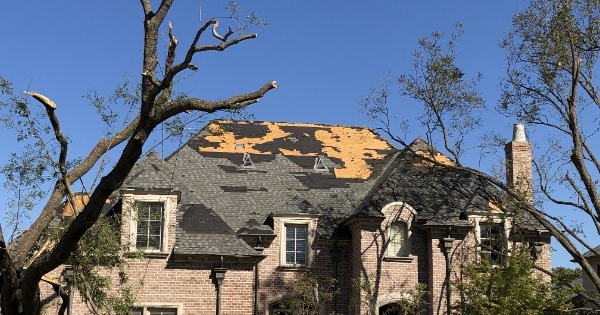
DECRA Metal Roofs Offer the Best Protection Against Tornadoes
Read More ...
How synthetic roofing stands up to severe weather
Read More ...
Roofing Safety in Cold Weather
Read More ...
UP TO THE MINUTE





Comments
Leave a Reply
Have an account? Login to leave a comment!
Sign In