

A silent threat: The risk of powerful winds
By Jesse Sanchez
Even heavy rooftop equipment isn’t immune to strong winds. Here’s how that’s changing the conversation around operational security.
When Scott Carpenter describes a 60-ton HVAC unit being tossed across a roof by 65-mph winds, he isn’t telling a tall tale; he’s sounding the alarm on a very real threat most building owners overlook until it’s too late. In this episode of the Roofing Road Trips® podcast, hosted by Heidi J. Ellsworth, the Anchor Products executive discusses the evolving conversation around rooftop operational security and why it's no longer enough to focus on just waterproofing and warranties.
Operational security might sound like fancy jargon, but Scott makes it clear that it’s about preventing the next disaster. “All those things that bounce across a roof in a wind event or seismic event, that gets us in trouble,” Scott says. “You could have the ultimate roof system, but then you’ve got something bouncing across all of it, putting holes in it.”
Provided by customer
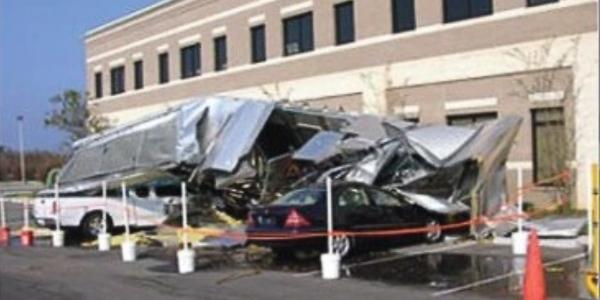
The stakes are high. Scott recounts a recent incident at a Texas data center: “This thing was 60 tons. And a 65 mile an hour wind blew it off the curb and it went rolling across the roof.” The result wasn’t just the near-catastrophe of a unit hurtling toward a parking lot; it was a 35-foot hole in the roof of a critical facility. As he explains, “Water on the floor is the worst thing that can happen to a manufacturing facility like that.”
This growing concern is especially relevant as more equipment, solar arrays, telecommunications gear, HVAC systems, are being installed on rooftops. While the International Building Code mandates mechanical attachments, awareness and enforcement remain inconsistent. “Is it being enforced?” one attendee asked during a presentation Scott gave. He recalls the passionate reply from a specifier: “I don’t care if it’s not being enforced. It’s in code for a reason and we’re always going to do the right thing because of the exposure to liability.”
And that exposure extends beyond repairs. Leaks from rooftop damage can shut down operations, destroy sensitive equipment and lead to lawsuits. “These are little paper cuts, little holes that you can never find until it starts leaking,” Scott says, pointing out how even privacy screens or signage can wreak havoc if left unanchored.
Read the transcript or Listen to the podcast to learn more about Scott’s insights, including how roofing contractors can identify unanchored hazards and turn safety into a revenue opportunity!
Learn more about Anchor Products in their Coffee Shop Directory or visit www.anchorp.com.
About the author

Jesse is a writer for The Coffee Shops. When he is not writing and learning about the roofing industry, he can be found powerlifting, playing saxophone or reading a good book.
Recommended For You

Strong Core Values Win the Race
Read More ...
What's really holding roofing companies back?
Read More ...
Expert insights from World of Concrete 2026
Read More ...
UP TO THE MINUTE





Comments
Leave a Reply
Have an account? Login to leave a comment!
Sign In