UP TO THE MINUTE





Are acrylics the new cool kid in coatings?
By Polyglass.
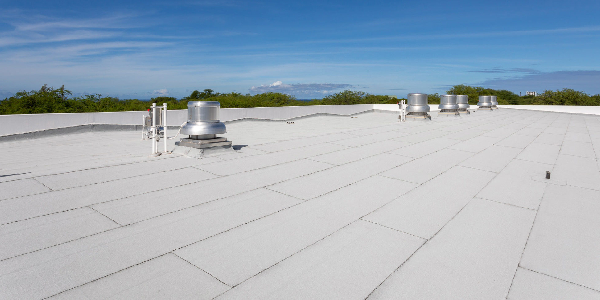
Offering high reflectivity, surface cooling and delivering surface protection, acrylic coatings might be the right product for your next project.
For any coating project, it’s crucial to examine the environmental conditions where the project is taking place, understand the goals of the project in terms of sustainability and then determine which product will best suit the project at hand. For coatings, one option that is rising in popularity recently is acrylics. But is this challenge to the traditional silicone coating just another fad?
Acrylics are rising in popularity because they offer many environmental benefits, such as providing a “cool” roof surface. This refers to products designed to lower Urban Heat Island (UHI) effects by increasing reflectivity and emissivity. This is not limited to the roof, but all exposed building surfaces in an attempt to make urban spaces healthier, both for people and nature. The experts here at Polyglass have broken down the background of this movement and how acrylic coatings fit into this.
A history of “cool” building materials
Various water-based acrylic material types have already been used in the construction industry for several decades, and light colors are also not new in construction. For example, whitewashing wood and other permeable surfaces is not a solution from the 21st century but the century before, with a history of 100-plus years.
From this perspective, using light colors in construction is not a contemporary fad but a historical approach. Granted, their earlier application was more about surface protection and aesthetics than cooling building surfaces, but light colors were effective just the same.
In addition, long before we gave much to UHI effects, reflective coating materials were widely used in the built environment to protect underlying surfaces and, at the same time, cool surfaces.
As we discover and use new technology to formulate protective coatings, they become more effective at cooling the surfaces they are applied to and protecting them from UV damage. One example is the growing understanding of using titanium dioxide (TiO2) and other UV-inhibiting materials in acrylics for a roof or wall coating to create “cooler” surfaces.
Acrylics – A means of sustainable surface cooling and protection
Various products and gadgetry are sold and promoted to protect surfaces, many with promises too good to be true. That said, using acrylic polymers, protective coatings are very effective at protecting and cooling the surface and typically use light colors, such as whites and off-whites. These are also the most cost-effective for use on roofs to cool and protect them.
Top benefits of acrylic-based roof coatings
Many manufacturers and varieties of acrylic-based coatings are available to coat most roofing membrane types. Depending on the make-up of the roof surface, preparation and primers are not only recommended but may be necessary if a good adhesive bond is to be achieved.
Building owners, developers and environmental-based agencies pursuing greater sustainability are looking for product longevity first and foremost. For obvious reasons, the greater its durability, the less often a roofing product must be replaced, which ultimately keeps waste out of landfills and other waste streams.
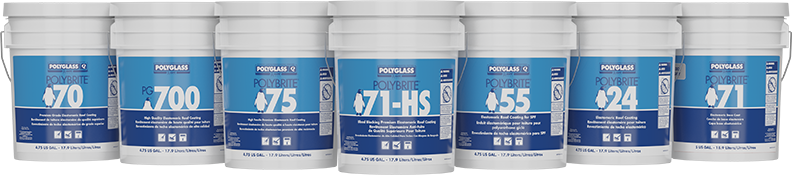
Using acrylics to protect new and existing roof systems is a viable and cost-effective means to add longevity to any structure, be it for vertical (walls) or horizontal (roofs) surfaces. Acrylic formulations offer not only high reflectivity and surface cooling but also deliver the bonus of surface protection. This keeps the damaging effects of UV exposure from directly impacting the surface. The less degradation, the longer the coating and the underlying materials (i.e., roof surface) will last, which extends the life of the roof and building and promotes sustainability.
As we coat the walls and roofs of new buildings with exterior paints or other finishes, these surfaces can also greatly profit from a protective acrylic coating. Like the benefits of sunblock on your skin to prevent sunburn, a quality acrylic coating applied to a new(er) roof will protect it from the damaging effect of years of UV exposure.
Even less common roof types and conditions can benefit from a protective acrylic coating. Examples include architectural and structural metal roofs, buildings and many single-ply membranes. Unusual and specialized constructions are also candidates for the benefits of acrylic coatings.
Original article source: Polyglass
Learn more about Polyglass in their Coffee Shop Directory or visit www.polyglass.us.
Recommended For You
High value on low pitch roofs with composite slate
Read More ...
Certainteed Launches Unified Ceilings Solution: Certainteed Architectural
Read More ...
GAF announces new nationwide availability of Timberline UHDZ® Shingles with UltraMat™ technology, delivering premium beauty and UL 2218 Class 4 impact resistance
Read More ...
UP TO THE MINUTE
Comments
Leave a Reply
Have an account? Login to leave a comment!
Sign In